
Disco Demolition Night: How a Baseball Game Turned Into an Anti-Disco Riot
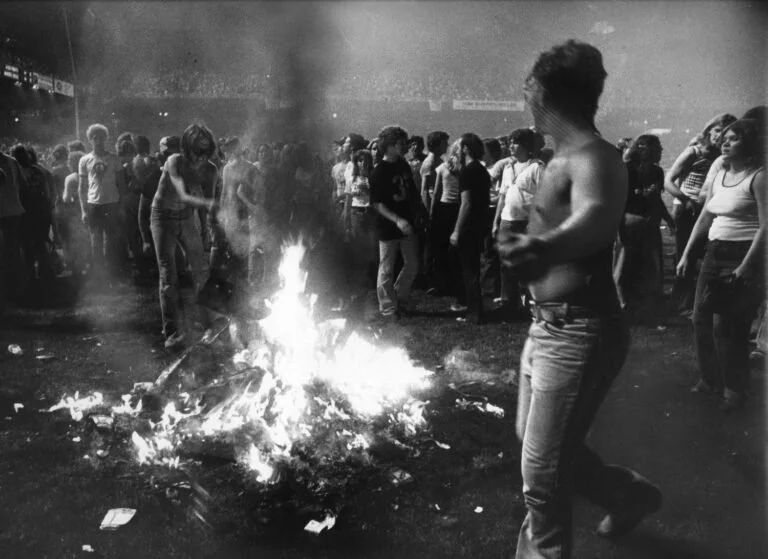
Disco Demolition Night is considered one of the darkest, and most embarrassing chapters in the history of both baseball and disco. In a Chicago stadium, in 1979, Rock n’ Roll fans gathered in their thousands to destroy disco records. Described as a “party that got out of hand” by some, and a “nazi book burning” by others. Disco Demolition Night remains a divisive subject to this day.
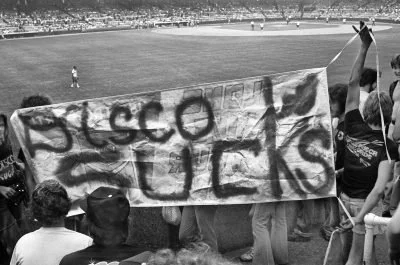
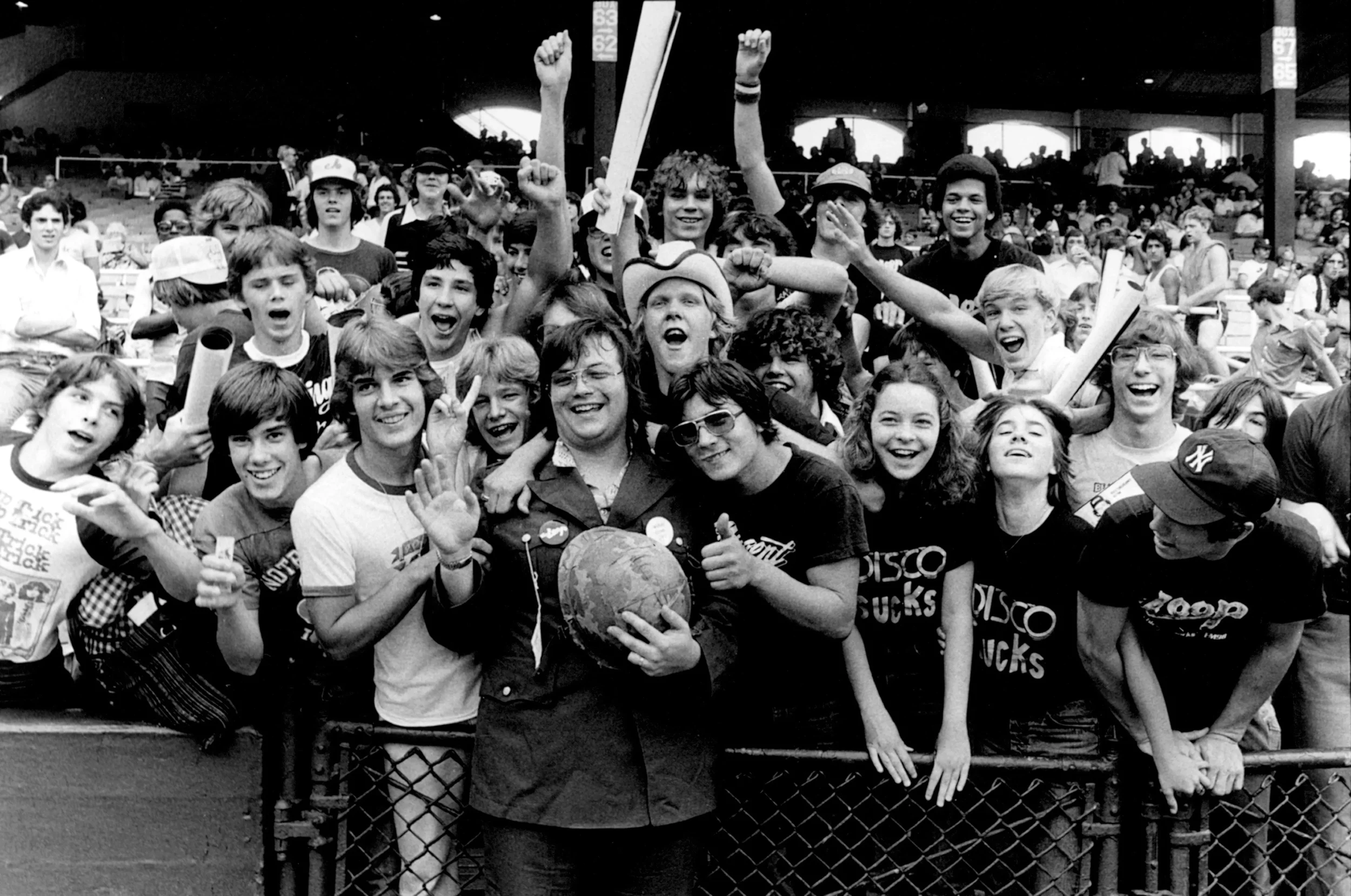
Thursday 12th July 1979, Chicago, Illinois, USA. What had been a sweltering day in the Windy City, was finally beginning to cool off as dusk descended. Down on the south side of Chicago, bordering the neighbourhood of Bridgeport, sat Comiskey Park, the home of the Chicago White Sox. That afternoon, the home team had continued a lacklustre season with another loss in the first game of a double header against the Detroit Tigers. Strangely, the fans in attendance that evening didn’t seem to mind. For the past two hours the crowd of mostly drunk, high, and shirtless men had been volleying across the stadium back and forth chants of; “Disco Sucks! Disco Sucks!”. Once the first game finished the chants reached fever pitch, as tensions grew ahead of the halftime entertainment. That evening, Cominsky Park would play host to the self-proclaimed leader of the anti-diso army; local disc-jockey, Steve Dahl.
The previous year, Dahl had been laid off by Chicago radio station WDAI when they switched to a strictly disco format, a genre the 24 year old rock’n’roll aficionado refused to play on principle. With his new home at WLUP radio, and an axe to grind, Dahl started what would become a recurring segment and eventual tirade against disco. In between playing predominantly American classic rock, Dahl would play the intro to disco records before scratching the needle over the wax and playing explosion sound effects, simulating the act of blowing up the records. Dahl would often preach his contempt for disco, citing the perceived exclusivity of the subculture, the lack of substance in the music, the effemination of the dress code, and worst of all, his feelings of being “forced to dance”. What started as a gag, soon became a movement. Dahl, with his anti-disco rhetoric inadvertently tapped into the consciousness of predominantly white men who had either grown tired of disco, or, more cynically, saw disco as an existential threat to “traditional American values”.
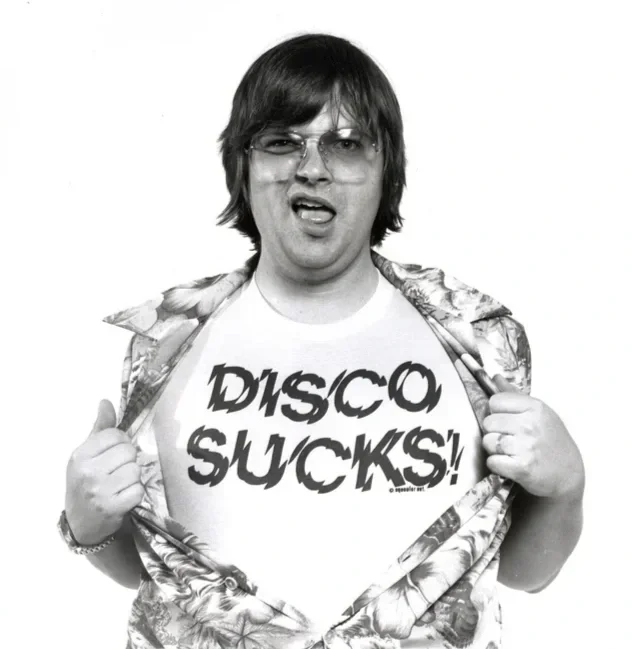
Mike Veeck, the 28 year old son of the White Sox owner, was one of Dahl’s many admirers. He empathised with Dahl’s anti-disco rants, and found his explosive antics on WLUP hilarious. Mike was placed in charge of organising promotions at Cominskey Park, to help improve attendances and, with the help of Dahl, came up with the idea to host a live ‘Disco Demolition Night’. The idea was simple, fans would bring a disco record to the stadium and be allowed admittance to the double header for $0.98. At halftime, Steve Dahl would blow the records up himself. Unfortunately, both Mike and Dahl failed to anticipate the sheer number of Chicagoan’s that would show up. By 14:30 the venue was officially sold out and the ushers closed the gates. This didn’t deter the fans though, and many more bribed, snuck and climbed into the ground ahead of the halftime show. Whilst the official capacity at Comiskey Park was 44,492, many estimate that the crowd in attendance on the evening of Disco Demolition Night exceeded 55,000.
Working as a White Sox usher that day was 14 year old Vince Lawrence. Not an ideal job for a Black teenager in the late 70s, given Comiskey Park's close proximity to the notoriously prejudiced neighbourhood of Bridgeport. Vince remained head strong, determined to save enough money to buy his first synthesiser. Vince noticed something was off that day when he started reading the titles of the records being brought in by the attendees. The demolition required disco records, but Vince noticed the majority of records weren't disco, they were just records by Black artists. By halftime, most of the records collected at the gates had been gathered into a large metal skip in the centrefield. Once the stage was set, Dahl took to the field aboard a Jeep to take command of his anti-disco army. Dressed in military helmet, Dahl rode out onto the field and seized a microphone:
“This is now officially the world's largest anti-disco rally. - In a few minutes, we're going to attempt the world’s largest disco demolition. - We took all the disco records that you brought tonight. We got them in a giant box, and we’re going to blow them up REEEEEAAAALLL Gooooood!”
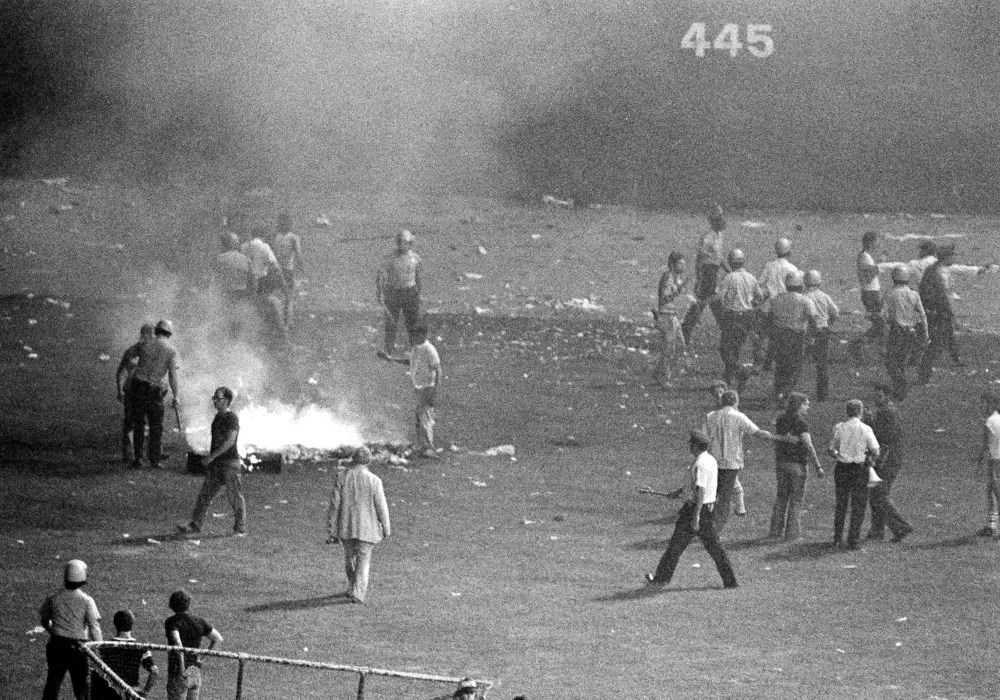
After detonation, records were sent flying into the sky. Dahl and his entourage took one last victory lap before making their exit. Immediately after their departure, all hell broke loose. The spectacle wasn’t enough, fans started storming the pitch in what would become a riot. By the end of the evening over 7000 people had invaded the field. They got into fights, ripped up the bases, tore down the batting cages and lit fires. Records that hadn’t been collected at the gates were hurled like frisbees by the spectators in the stands, adding to the carnage. After almost an hour of mayhem, the police were brought in to disperse the crowd. 39 people were arrested, the White Sox were forced to forfeit the second game, and America was left grappling, trying to understand what they’d witnessed: Was Disco Demolition Night just a mob of young drunken idiots cutting loose and having fun? Or an early battleground of the bubbling culture war, fueled on hatred, homophobia and racism?
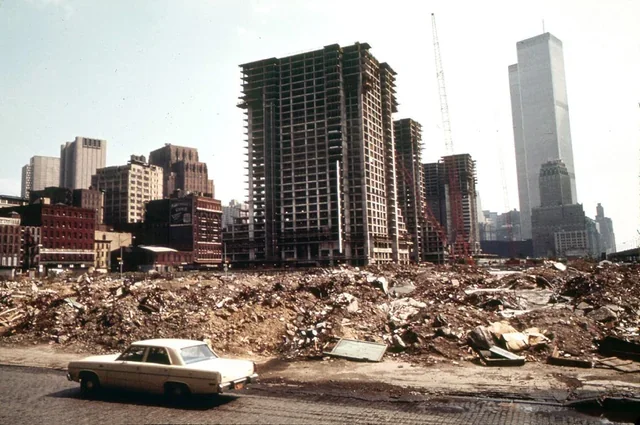
Disco as a movement began sometime in the late 1960s in the dilapidated ruins of New York's warehouses, loft spaces, and abandoned hotels. Deindustrialisation coupled with a growing population of blue collar workers fleeing the Jim Crow South and a mass exodus of white collar workers to the suburbs led to mass unemployment. The decreased tax revenue and increased borrowing, placed the municipality in crippling debt, leading to harsh austerity. Public services were the first to have their funding cut; rubbish began to pile up in the streets, corruption spread through the police like a virus, and firefighters had to take taxis to incidents. Which were becoming more frequent, thanks to fraudster landlords. In the midst of the recession, the municipal government put in place a series of rent control regulations to help protect lower income residents. Many of the city's landlords took umbrage with these measures, and so began to protest by allowing their properties to fall into disrepair and even committing arson, making their properties unlivable. It is within this backdrop, of a crumbling city on the brink of collapse, that disco emerged as a form of escapism and relief.
During the founding years of disco, on the dancefloors of DJ’s Terry Noel (Arthur, New York, 1968), Francis Grasso (The Sanctuary, New York, 1969), and David Mancuso (The Loft, New York, 1970); you would be more likely to hear anglicised blues by the Rolling Stones, the percussive Afro-psychadlia of Babatunde Olatunji, or the spiritual choral singing of Les Troubadours Du Roi Baudouin than you would any searing solos by disco divas. The early tastemakers were remnants of the 1960s countercultural movement with a penchant for psychedelic rock, extended percussive brakes and ethereal, atmospheric transcendence. The DJs wanted to take their audience on a ‘trip’, often supplemented by the drug of choice at the time; LSD. Depending how you look at it, disco can be seen as a celebration of the successes of liberal America or the last gasps of the swinging sixties. Either way, disco held community, integration, and inclusivity at its core, central tenants of the growing Gay Rights movement.
On the evening of June 28th 1969, “the lilies of the valley turned carnivorous”. After years of police harassment the clientele of Greenwich Village’s Stonewall Inn decided enough was enough, and fought back in what would be immortalised as a turning point in LGBTQIA+ liberation. Disco played a central role in the gay uprising. Disco soundtracked the movement, but more importantly helped foster communities of out-and-proud club goers who no longer felt chastised as social pariahs but instead defiant in their sexuality. Disco facilitated a newfound politics of pleasure. In a similar vein to how soul and funk music had helped inspire the civil rights movement of the early sixties, disco borrowed many of the components of the two genres such as gospel vocalisations, lush strings, head-nodding bass riffs and percussive breaks and added a surging, pulsating 4/4 beat fit for the dancefloor and the march. The final component of what came to define disco as a new genre came in 1973, when renowned disco pioneer DJ Nicky Siano began playing at The Gallery (New York). Siano was an early adopter of the mixing board (mixer), which allowed him to manipulate the equalisation (EQ) of the records he played. By isolating treble, mid-range, and bass, Siano was able to seamlessly layer in his hallmark selection of strong female vocals, bringing the disco diva to disco and forever changing the genre.
Gloria Gaynor, perhaps the most widely renowned disco diva was propelled to the top of the US charts in January 1975, with her cover of The Jackson 5’s ‘Never Can Say Goodbye’. Just three months after Gaynor’s chart topping hit, Van McCoy & the Soul City Symphony released ‘The Hustle’. With its catchy melody and accompanying dance moves, ‘The Hustle’ took America by storm with the type of unrelenting virality you’d expect of a modern day TikTok craze. This moment marked a turning point in disco's trajectory, and a departure from disco's fringe, underground dance music and club culture, towards the commercialised, populist music that would engulf America in the mid 70s. Whilst a great pop hit in its own right, McCoy’s ‘The Hustle’ was hardly club music. Gone was the throbbing 4/4 beat fit for all night bumping and gyrating with handsome strangers. Instead, ‘The Hustle’ settles into a mundane, almost rhythmless cantor, and is accompanied by a dance so sterile, it has more in common with country music’s line dancing than anything that could be seen on the dancefloors of New York’s Le Jardin, or Tenth Floor.
Corporate America quickly wrapped its arms around disco. Many traditionally White record labels such as Columbia began to take note of disco’s rising star, and despite years of indifference to Black musical forms such as soul and R&B, began investing heavily in the genre, producing their first No. 1 hit in 1976 with Johnie Taylor’s ‘Disco Lady’. However, even with the influx of White investment, Black musicians saw very little reward. “In 1973, (just before the disco boom took off) Black artists accounted for 36% of the 100 best-selling singles in the US; by 1978 the percentage was down to 21%”. It wasn’t just in the charts that capitalism was spreading its tentacles: With the success of John Travolta and John Badham’s (dir.) ‘Saturday Night Fever’ (1977), disco dancing and the discotheque became commodifiable assets. The most famous (or infamous), New York’s Studio 54.
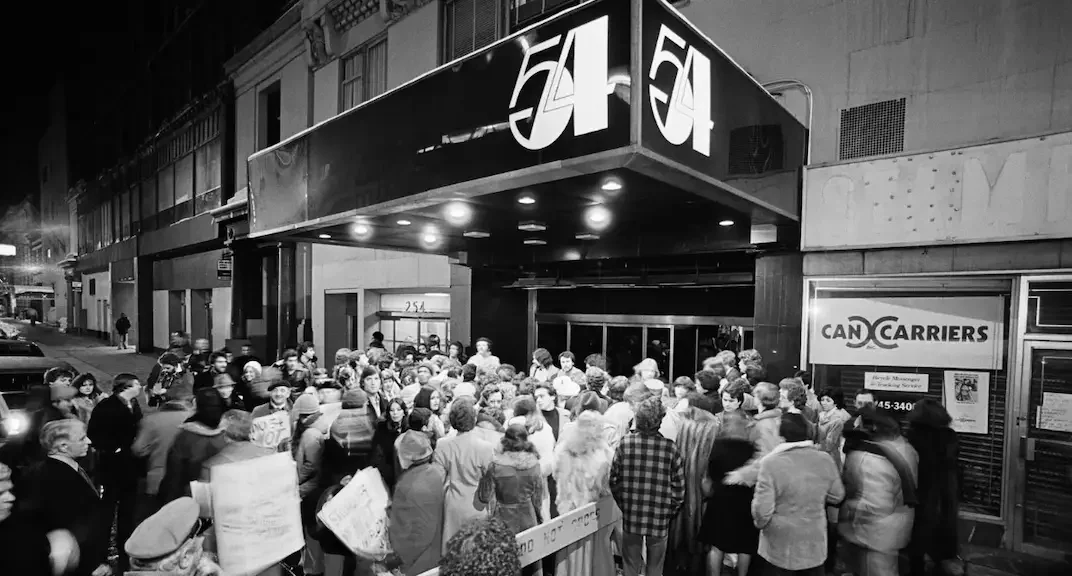
Opened in April 1977 thanks to the $400,000 (over $2m in today's money) investment of businessmen Steve Rubell & Ian Schrager. Studio 54 was detached from disco’s earliest clubs not just in the level of investment but also its ethos. Studio 54 ditched community and inclusivity in place of velvet rope and a celebrity clientele. The club was so exclusive, they even denied entry to Nile Rodgers and Bernard Edwards on New Years eve 1977, the same year Chic released dancefloor hits ‘Dance, Dance, Dance’ and ‘Everybody Dance’.
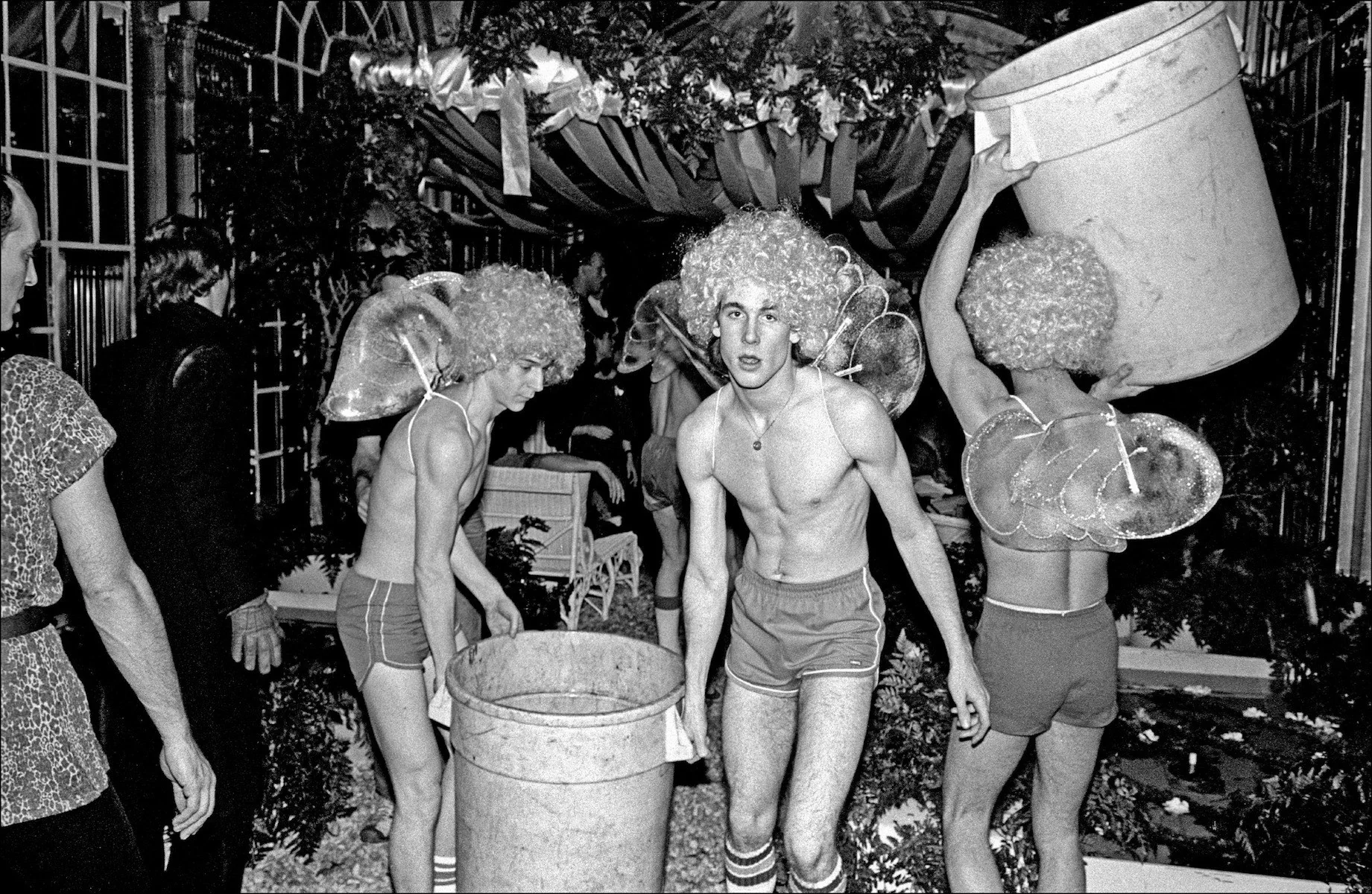
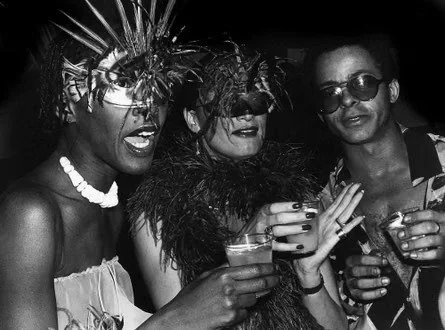
By 1979 there were an estimated 20,000 discotheques in the US alone, all trying to capitalise on the success of clubs like Studio 54. Commercialisation and capitalism changed the face of disco, creating a product more palatable to middle America. Disco was still very much camp, but removed were the more outwardly gay aspects of the movement. In a similar vein, people of colour became increasingly marginalised from the dance floor. By the late 70s, in many clubs across America the only people of colour would be either the DJs or the staff. In spite of the White and Straight washing of disco, Steve Dahl and his army of rock’n’roll denizens still condemned what they saw as a corrupting force sweeping America.
There is a distinct irony to the violence and destruction that unfolded at Cominsky Park. Many of the perceived ‘tenants’ of disco that the crowd rallied against; such as polyester suits and performative dancing, can be attributed to the commercialisation of Disco rather than the original underground movement. Many of the critiques of commercial Disco that Dahl and his cabal of followers held were likely shared with many of Disco's club-going originators. Which, should in no way apologise for the actions of that fateful evening. Serving as an undercurrent upon which Dahl founded his platform, was a fear and hatred of homosexual, black, and latino culture.
Once dubbed ‘America’s favourite pastime’; Baseball has offered a reflection of the American psyche for well over a century. Disco Demolition Night then, can be seen as an early battleground of a culture war which still rages today. But disco never really died. Instead it retreated underground, kept alive by Larry Levan (Paradise Garage, New York), and Arthur Russel, and progressed by ‘Loft Baby’ Frankie Knuckles, in Chicago’s The Warehouse. The music played by Knuckles in The Warehouse would eventually be referred to as ‘House music’, and would help inspire Comiskey Park's very own Vince Lawrence to co-produce and record the first House record ‘On and On’ (1984). Paradoxically, Disco Demolition Night and the hateful rhetoric of Steve Dahl may have been the best thing that could have ever happened to Disco and underground music. Disco was finally free from the scorn of conservative America and opportunists looking to make a quick buck. Out of the spotlight, people could return to what they’d always done: Dancing the night away at the discotheque, in a room of familiar faces and kindred spirits.
Written by Joe Charles
Edited by Zak Hardy