
The Lost identity of Lost Club
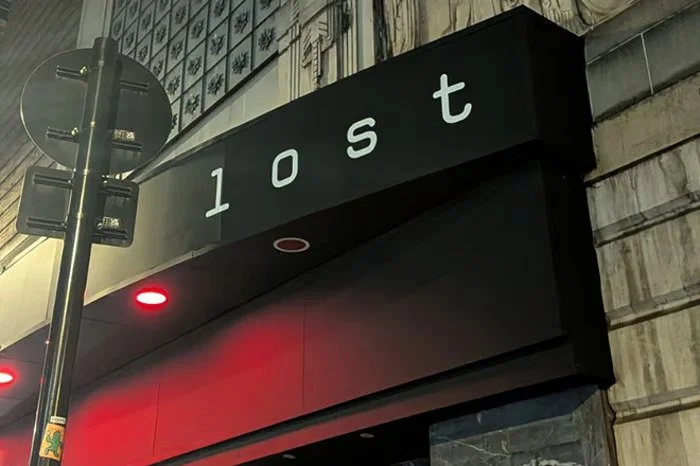
Lost club is a testament to the confused identity of London’s dance music scene, argues Min Hein.
Standing in Shaftesbury Avenue at half eleven on a Friday, doing that silent negotiation with myself: Overground fare, drinks, the hour to Tottenham back home. Not to mention the £25 entry fee. The number doesn't get smaller. I go to Dalston. I go to Stokey. I believe in small rooms and redlining speakers, in security guards who look bored rather than cosmically empowered. lost sounded like a venue that had read its own press release before it opened, deliberate about its own mythology. But my housemate was performing there with a Georgian choir, on the bill with The Dare and Charli XCX, and she could get me on the list. So I went.
The venue's name was not neutral ground. The name ‘Lost’ was lifted from a legendary 90s underground techno night. Arguably this has been appropriated to lend legitimacy to the club night’s expensive tickets, which are aimed at an audience which plans their weekends using a commercial lifestyle guide or app. Whether that constitutes homage or corporate plagiarism is a question I'll leave open. I already know how I feel about it.
It was the final night of lost club, although it was hard to believe. Every weekend another closure announcement circulated until the urgency became a running joke. But this time it appeared to be true. This was either my first and last night at lost, or simply my last.
The building is the old Odeon on Shaftesbury Avenue, Grade II listed, where Jimi Hendrix performed and The Beatles were filmed. lost had painted the entire interior black and handed everyone a piece of chalk, the surfaces were lined with scribbles from people who wanted to exist in a building that was about to disappear. Laid out on a massive board, the venue’s sprawling itinerary: a theatre, cinema, music hall, club, loft, and a (fabled) rooftop makes FOMO inevitable. You can’t experience it all, the labyrinth makes the choices, and you only find out what you missed once you’re on the night bus home.
I was at the entrance, but it’s as far as my phone goes, disappearing into a Yondr pouch that was magnetically sealed. Gone. I had not understood how much of my posture was organised around my phone. Without it, my hands kept returning to my pockets, clinging to the instinct to document. Then something shifted. People were talking. Actual, sustained conversation in the dark. Unmoored from our digital tethers, we just stood in the dark and talked. The phone ban, for all its performative utopianism, had delivered something real: it had made the room too uncomfortable to be superficial, at least, momentarily.
The illusion of an egalitarian utopia had its limits. Upon entering the main club room, I spotted a roped-off VIP section, erected for a premium bottle service. This is the same venue that demands you surrender your phone for shared presence, then throws up velvet ropes for people who paid extra to be presented as more important.
The inability to control the vast building was its saving grace. The Tunnel held twenty people. The ceiling was so low the heat had nowhere to go, the DJ right in the back of it all. People were smoking inside because the venue's rules had already started dissolving. The room vibrated with the feral energy of a space getting away with something, a frequency that no amount of branded immersive event design can manufacture. It is the best feeling a room can have. It is always temporary.
On the way back towards the main Club floor the corridor narrowed and the crowd thickened. Charli XCX walked past. Two inches away. Close enough that I turned to the person next to me to question it. But with no phone there was no instinct to document, so instead I just experienced the spatial weirdness, which somehow felt entirely right.
After the Georgian choir, Fabien Riggall made a speech. His name had been kept off lost's marketing, a strategic choice, perhaps, as the Secret Cinema founder who allegedly pocketed $100 million from its sale after securing a million-pound pandemic bailout while grassroots venues died. He spoke about community, pivoted to AI, muttered something about autistic AI billionaires, caught himself, and then kept going. The speech had the unedited quality of a thought that had outrun its own intention.
Someone in the dark crowd interrupted, “Shut the fuck up and play some music.” Riggall paused and returned a, “Fuck you.” This was the realest thing that happened all night.
I arrived suspicious and left suspicious. The velvet ropes were real. The feeling of communal utopia felt real. Yet, the founder's speech did not make me feel like club culture has been saved, especially not in a venue whose name was borrowed from a history it didn't earn. And yet, somehow, it was one of the best nights I've had in London in years. The wandering, the secret rooms, a Georgian choir filling the shell of a cinema about to become a hotel lobby, and the sweaty Tunnel. The utopian and the cynical pressed up against each other all night, inseparable, both true at once. That contradiction is the most authentically London thing about it.
I'm a photographer. So, by trade and instinct, I wanted to document it all: the chalk dust on the walls, the faces in that heavy low light, the exact moment in The Tunnel when everyone was just there together, getting away with something in a room about to stop existing. But I can't prove any of it happened. There’s no image to return to, no digital archive to check my memory against, no proof of place. Just the memory of chalk dust on a wall that's already been painted over. And the knowledge that by the time you read this, the building is already something else.
Text by Min Hein
Edited by Molly Clare & Zak Hardy