
‘Everyone needs to be listened to. Even the kids’: Inside The Rainy Scottish Festival, Kelburn Garden Party
All photography by Emily Slade
Reda Gray speaks to the rising talent of Scotland’s jazz, hip-hop and dance music scenes within the grassroots ethos of Kelburn’s DIY festival.
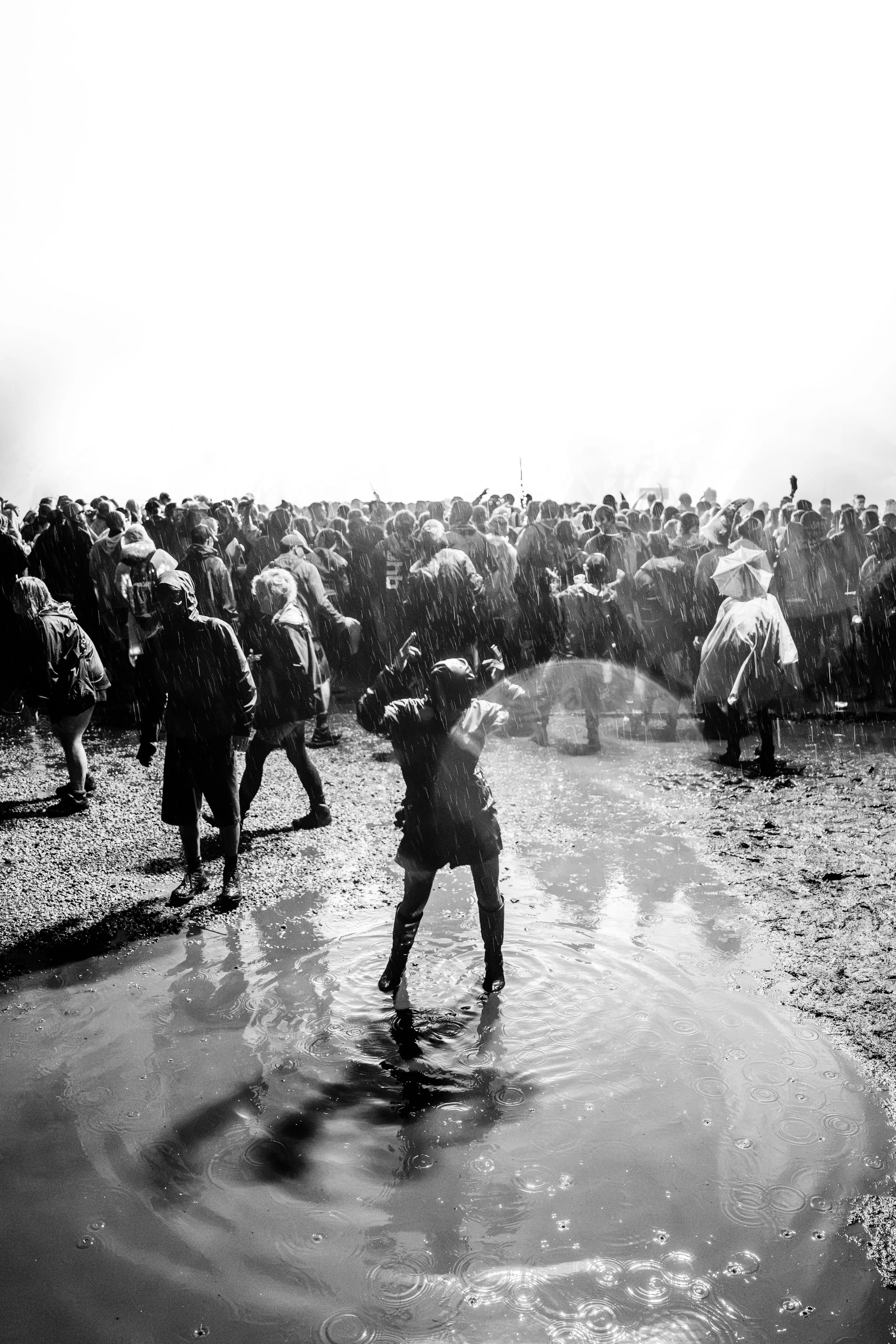
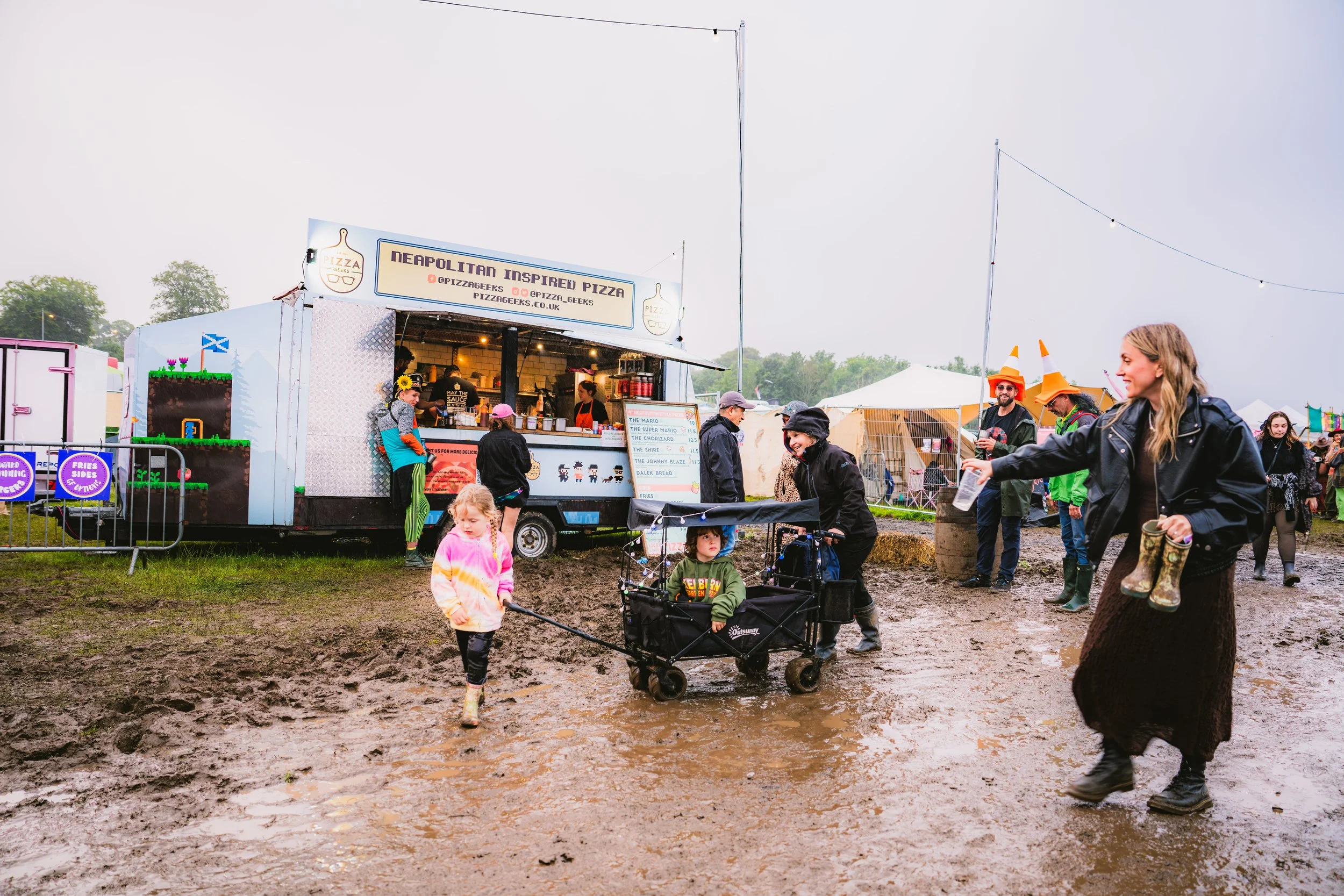
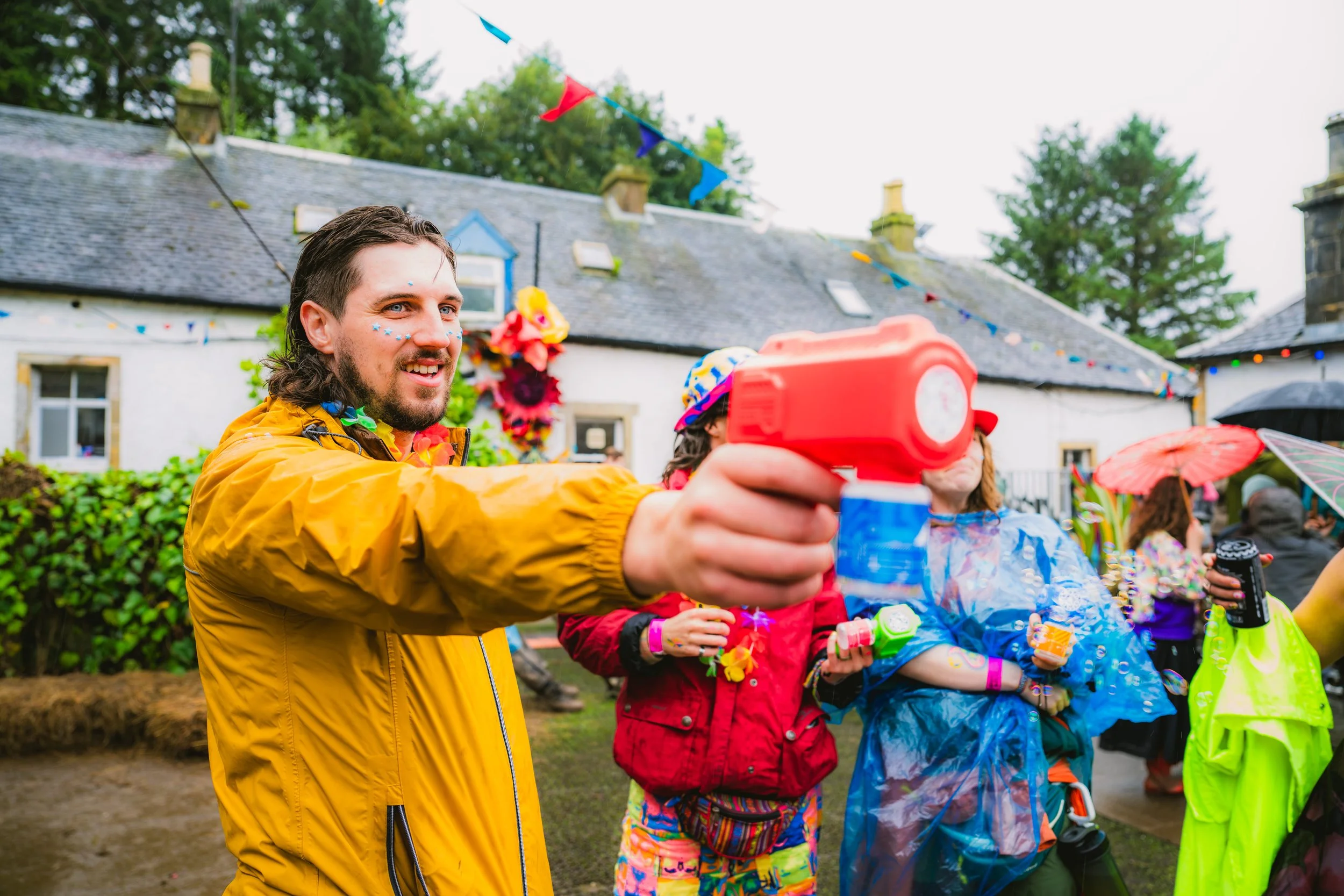
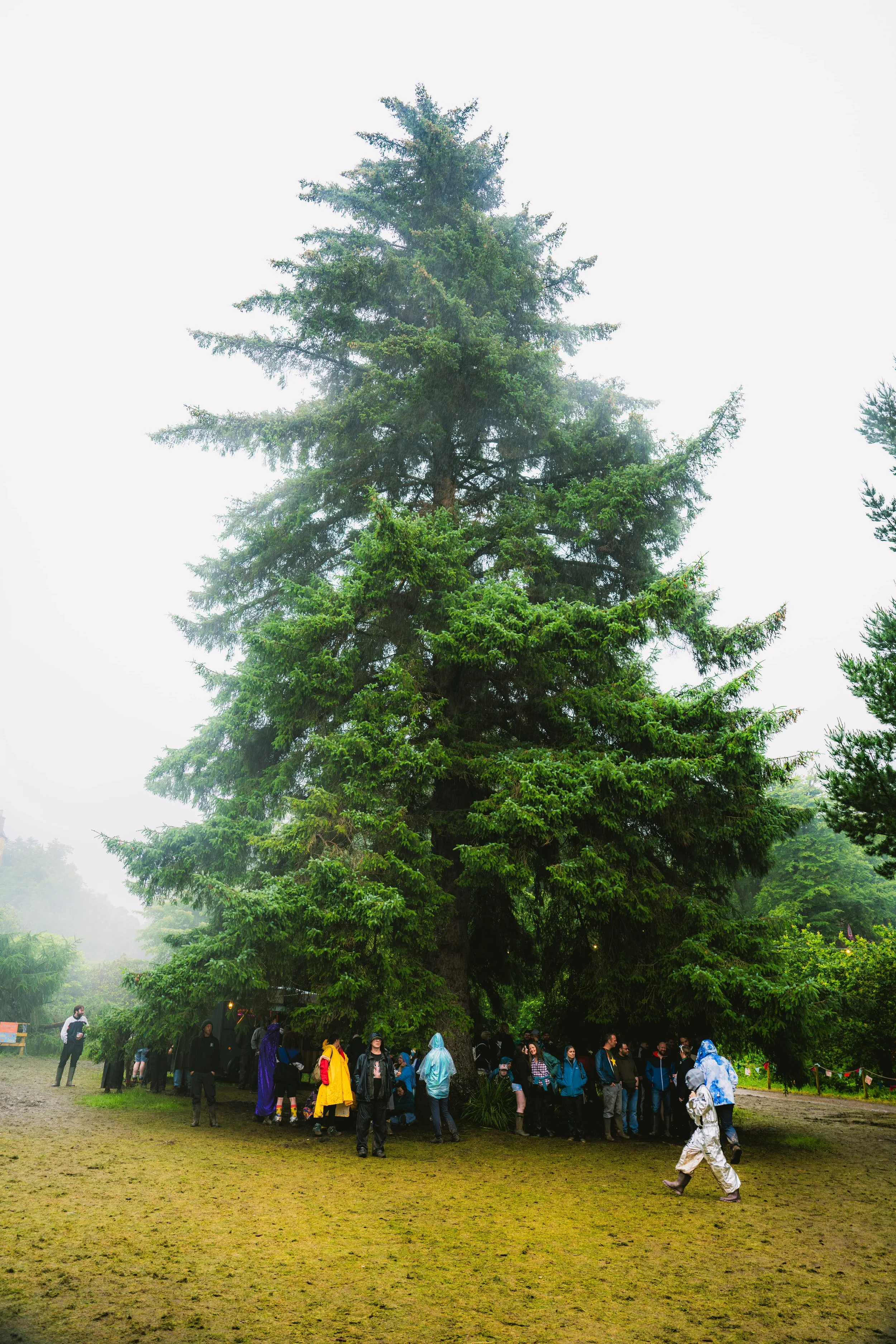
What started as a collection of small parties near the graffitied castle on the Kelburn estate has since evolved into one of the most eclectic events in the Scottish musicscape. In the 16th year of its annual run, attendees have been quick to comment on the torrential rain and unrelenting joy that shaped Kelburn Garden Party in 2026.
The DIY festival, free of any stakeholders or corporate sponsors, has relied heavily on the steadfast goodwill of its cult following of punters who come through time after time, no matter the forecast. With shaky determination, I trudged through the marshy grounds to speak to both up-and-coming and Scotland’s more established, homegrown talent.
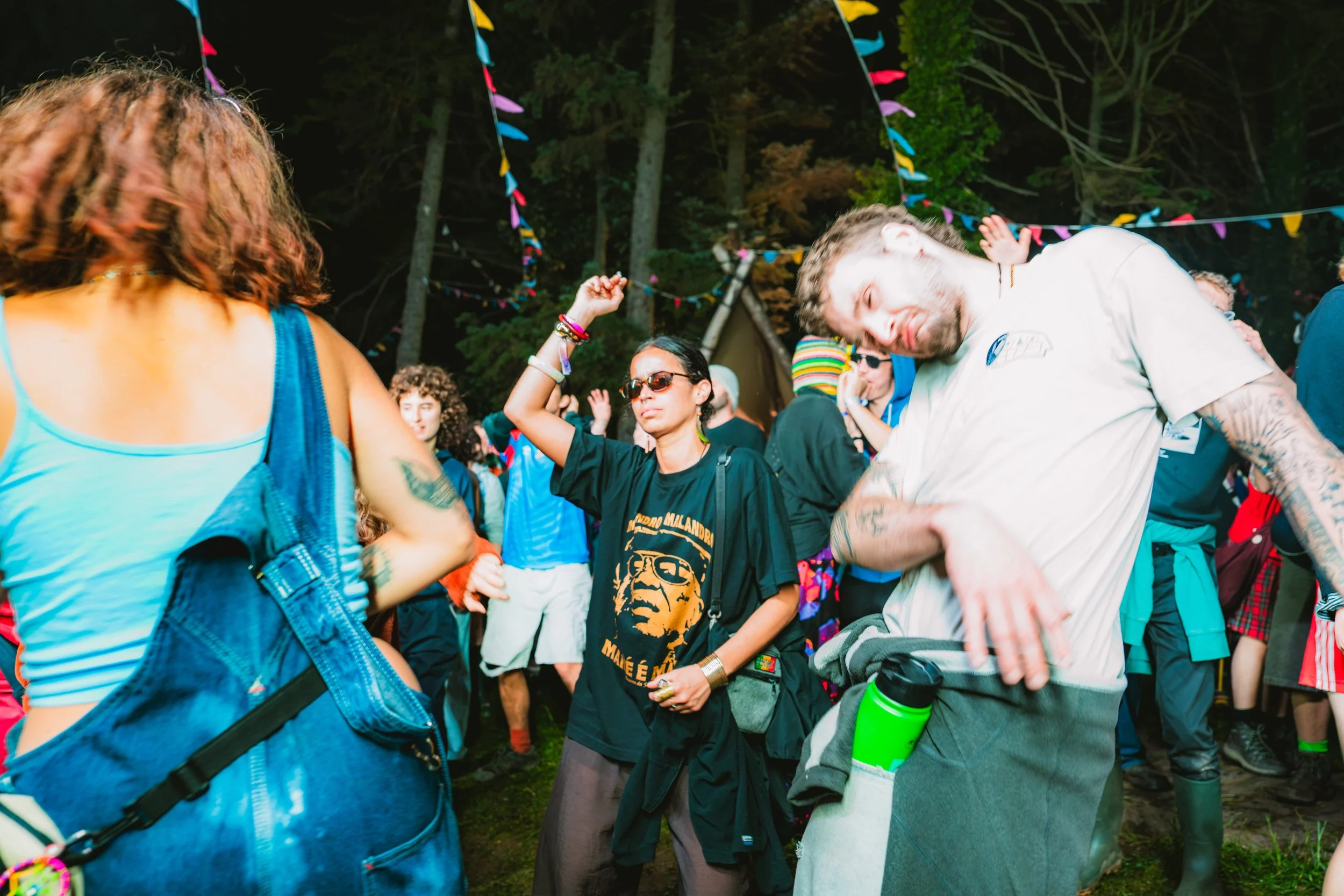
“It’s got to be the best crowd I’ve ever played to in Scotland [ … ] At Kelburn, people move, they shout, and they get involved” - Paul Copeland of Kai Reesu
I first met up with Chris Astrojazz (Chris Knight), the Edinburgh-based DJ and club promoter of Samedia Shebeen, who helped co-found the festival with David Boyle. Aside from his partner’s role in shaping Kelburn’s visual layout, he explains that he is more involved in curating the festival’s sound. ‘I start with a blank programme. I know how all the stages should feel. It’s almost like grids’ he explains. ‘For example, the Viewpoint is more soulful, organic sort of stuff. The Square is obviously all live music. And the Saloon is a place for takeovers. So it’s literally like slotting pegs in the holes.’
At the Saloon, I waded into the wooded, Spaghetti-Western style fortress, flooded with ravers shuffling to the sounds of baile, Latin tech, Arab bass and other bouncy club edits from Edinburgh’s own club night, Import.WAV. Prior to her own takeover at the Saloon, Grace LaNasa, otherwise known as Buckfast Barbie, tells me the crowd is in for some ‘big, global, bass booty shaking’. Drawing upon music imported from different regions and cultures around the world, she sees her slot as an opportunity for people who have emigrated to Scotland to let their hair down and flex who they are and where they are from unapologetically. ‘I want to use the night to platform all the different global sounds that I listen to. I grew up speaking Spanish. I just have always been very into Latin bass, cumbia and porro.’ Recognising the precarity of life as an immigrant within the UK, ‘me and Ali (al gu), who I’m going back to back with, were in the trenches trying to get our visas renewed. And (through that) I realized I need to have an outlet where I can platform people that can show how important immigrants are in the Scottish music scene.’
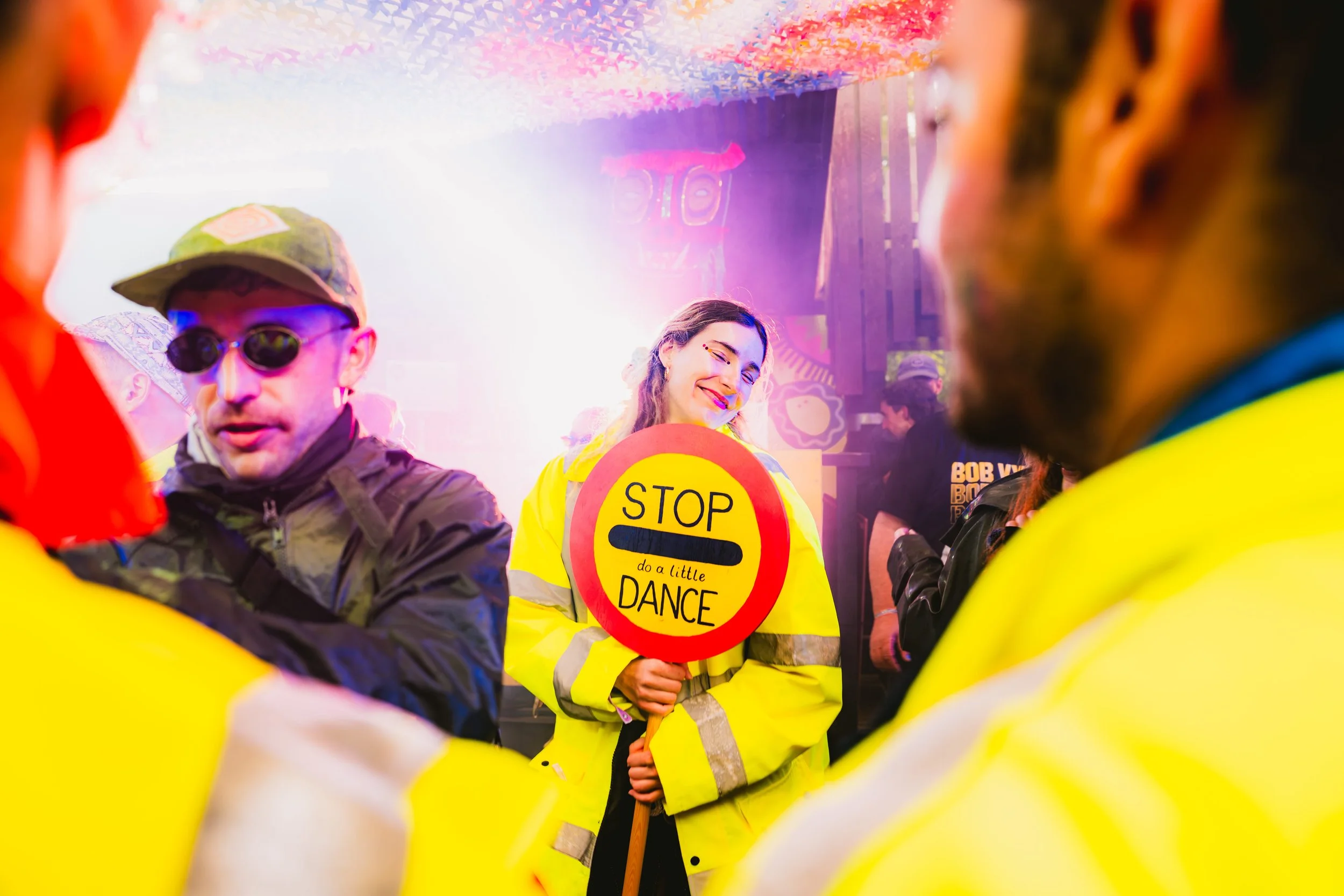
During the daytime, I listened to the French-born artist GAÏA, or Gaïa Jeannot, play an intimate soulful set on the Pyramid stage. Chatting to the singer whose songwriting blends neo-soul and jazz with an emotional intensity drawn from her own personal life and the lives of her friends, she says that ‘generally in Scotland, people are very open here to just listen to genres that aren’t necessarily in their heavy rotation’. At the same stage, I caught the LA-born, Glasgow-based hip-hop MC Jurnalist shelling it on the mic to astronomic jazz that he and his bandmates of Kai Reesu perform. ‘It’s got to be the best crowd I’ve ever played to in Scotland’ says Paul Copeland, who is on the keys and produced their award-winning album KOMPROMAT vol.i. ‘It’s like people are just receptive to the music in the way that me and the band have always hoped for. At Kelburn, people move, they shout, and they get involved.’
Walking around the Viewpoint that overlooks the winding glen valley below, the Glasgow-based DJ known as ButhoTheWarrior found that it offers a wonderful space where ‘my sound can translate better. I felt (this was a) comfortable place to play my new stuff because people here are really receptive.’ Performing alongside band members like MC Einstein, who is a regular fixture on Samedia Shebeen, they brought a live energy feel to Butho’s set as he spun Nina Simone’s ‘Four Women’ with an Afrohouse, rhythmic pulse that was felt throughout the disco-star-spangled stage.
“Kelburn's got such a wide range of musicians, sounds and people from different backgrounds. That's something that means a lot to me.” - BEMZ
‘I grew up in music’ says Butho, whose name is short for Nqgabutho Mpofu. ‘I lived in Bulawayo, which is like the second capital city of Zimbabwe. The neighbourhood I lived in was opposite a cocktail bar that would have bands from South Africa, Zambia, Zimbabwe, Kenya. It was very ridiculously cultured for its time.’ Continuing to play the same tunes that raised him, the set followed an electric thread of music that would extend as far as from Japan to Brazil.
However, while he was afforded the space to play freely on a major stage, Butho believes that Scotland as a whole still has a long path ahead for the growth of black artists. ‘There’s so many selectors, so many black artists that don’t get the support’ he laments. ‘People look at me and might go “oh, but you’re gigging”. But I’m not speaking about myself. I’m just one guy.’
Taking aim at the total absence of black owned sound systems in Scotland (with mention of the fact that this was not always the case), he calls out what he sees as a ‘disconnect’ between what’s being played and who gets to play. ‘All the soundsystems that people play in and people can attend are owned by white people. There’s nothing wrong with that. But there is something wrong about black people not owning any system.’ Speaking more broadly about the established Glasgow institutions like SubClub, he cautions that they need to make sure they are not ‘being passive to the black people in the city’ by sidelining them for bookings of exclusively black American artists. With that said, the founder of the JAIVA collective—who has been putting on parties as far back as 2019—finds that there will ‘always be room for improvement. There are always people that need to be represented in a community. Everyone needs to be listened to, even the kids.’
Blessed by a brief spell of sunshine, the Nigerian-born, Scottish-raised rapper named BEMZ jumped on the same stage to reel off a number of bangers, including his recently dropped tune DND (read: do-not-disturb), which he ran back twice during his Sunday evening slot. Still feeling the adrenaline of the performance, the DJ MAG award-winning artist tells me that he’s been coming to this festival ‘for like 10 to 11 years now. And I think it’s just so beautiful that I’ve gone from punter to now playing the stage.’
With Butho’s views in mind, I asked whether he believes there are many opportunities afforded to black artists in Scotland, which prompted the rapper, raised by the name of Jubemi lyiku, to recall ‘being a wee guy in Stranraer waiting for someone to give me an opportunity that didn’t come. I remember being a wee guy from Ayr waiting for someone to give me an opportunity. And unfortunately, that didn’t really come either. So, we had to create it for ourselves.’ Having previously hosted several events named M4 (which stands for ‘made for everyone’) that would platform artists like GAÏA herself, Sean Focus and Junglehussi, the rapper has worked tirelessly to put a spotlight on the overlooked talent brewing in Scotland. Taken in by the same eclectic range of musicians, sounds and people of different backgrounds that he has been exposed to over the years coming to Kelburn, ‘that’s something that means a lot to me’ he admits. ‘So to be able to implement something like that (in M4). Yeah, it makes sense.’
Although this year’s edition of M4 was pulled due to a lack of ticket sales, lyiku maintains it’s just a case of persistently trying to create new spaces that can help chip away at the more exclusive, mainstream channels that exist out there. ‘M4 for me is like doing things that I wish I had when I was up and coming so I can make the journey easier for the next generation’ he says. ‘We might not have unlimited budgets, like a lot of promoters, but we can make it work, we just have to keep doing it for ourselves.’ That is why the organisers of M4 have since pledged to regroup and work towards ‘a new date with the venue and acts’ who were originally rostered for their 2026 lineup. This follows in tandem with droves of other Scottish festivals that have been cancelled this year alone, including Kelburn’s own Jazz weekender which was pulled for the same reason as M4.
Whether it be low ticket-sales, inflation or the exclusionary practices of cagey, corporate-funded outlets, it all begs the same question: can independent festivals continue to persist when faced with ever tighter constraints? For the co-founder Chris Knight, he sees’ his own festival as a space capable of ‘bringing people together and fostering the sort of creative fertile ground that can then grow beyond the weekend itself.’ The key is for spaces like Kelburn to continue to play a collaborative, rather than a competitive role, that can help coordinate and sustain the different grassroots projects that exist across Scotland, regardless if they are designed to launch careers, platform communities of colour or simply act as a haven for misfits. ‘We try to exit in a more cosmic plane’ Knight shares, where ‘kindness for one another’ takes absolute precedence.
Dragging what was left of my tent out of the disenchanted, damp remains of the campsite, I was carried by a remote sense of resolve that I would return next year.
Written by Reda Gray
Edited by Zak Hardy
Photos by Emily Slade