
In conversation: Dar Disku

Having shown up fashionably late to the venue, we could see Vish Mhatre and Mazen Almaskati, the UK-based DJs who comprise the Dar Disku duo, totally absorbed in their set. Finding ourselves wedged in between the clubbers, we surged forward to the vocal greeting of ‘As-Salamu Alaykum’ inserted into the chorus of dance classic anthem ‘Pump Up The Jam,’ that was thumping from within the intimately congested, warehoused-space. Swaying to the stop-start motion of the track that was toying with the crowd, I couldn’t help but wonder if this was a typical night out for Dar Disku?
Before I would arrive at the event that was very much in full-swing, I sat down with the Bahraini-born, childhood friends who would exhibit that same, energetic sense of warmth I would see channelled into the mix they would put on later that night. They shared with me how much things have changed for them since they started their record label and DJ collective in 2019. “If you were to ask me a few years ago, what is Dar Disku” Mazen recalls, “I might’ve said something along the lines of, ‘we’re trying to rediscover gems from the Middle East’ or whatever, but the world has changed since then.” Agreeably, Vish remembers Dar Disku as a project more holistically based on nostalgia. “Now, slowly, [we are] moving towards a new tone for the stuff that we don’t think exists.”

Long-on from the days of reimagining Arab pop classics with an Italo-House, bass-heavy weight, the duo has gone on to produce entirely original music in their debut, self-titled album released on Soundway Records. Shaped by a vinyl-waxy sound and an interwoven collection of influences and artists, spanning from the notorious Indian singer Asha Puthli to the North African Raï blend of Yacine El Kaldi—whose tune ‘Dbayli’ would go on to groove the crowd a few hours on from our interview—they both make it clear to me that they have a drive to really experiment with the music they put out. “For a period of time, it brought us a lot of joy and we’re really proud of attaching ourselves to this history of a track we had found, you know, flipping it and editing it,” says Mazen. Moving forward, however, they ask themselves, what is the Middle Eastern electronic music scene going to sound like in 20 years?
The impetus now, they find, is to take the listener on a journey that goes beyond simply sharing a catalogue of the different regional sounds they tap into. “When you come to a Dar Disku show, you’re going to hear the ones that you know” Vish foretells me, “but you’re also always going to be pushed, slightly uncomfortably, in multiple directions.” That unpredictability certainly came to mind as we made our way onto the dancefloor, where the squelchy acid sound would feed into the feral ambiance lurking within the night.
One method to the madness they would share, is to play with the phrasing, repetition, and what Vish calls the ‘Dilla’ level swing of Bahraini percussive music, “it’s almost kind of got a lazy, polyrhythm of layered sound.” Speaking more broadly, Mazen adds that it is the microtones of Middle Eastern and Southwest Asian music that plays a subtle, yet deeply interconnected role in the sounds that they both curate and create, “that’s something we’ve experimented with the live music, but a lot more now [we’re] thinking about how we can embed microtones into electronic music.” It is through the attention they pay to the more minute details that lend them the ability to bridge sounds that may seem entirely remote from one another. One moment that comes to mind was the androgynous howl of proto-house, disco remix of Arthur Rusell’s ‘Go Bang’ somehow bleeding in with the intonating, vocal harmonies of Bollywood screamer ‘Pyar Do Pyar Lo’ by Sapna Mukherjee. At another point, you could hear the chimes of a cowbell echoing out from a Turkish Fantezi pop song, that would eventually slip into the tunnelling, warming beat of some Balearic house tune. “If you understand the links between the sections” Vish suggests, “that’s when people really get it. People get locked in"
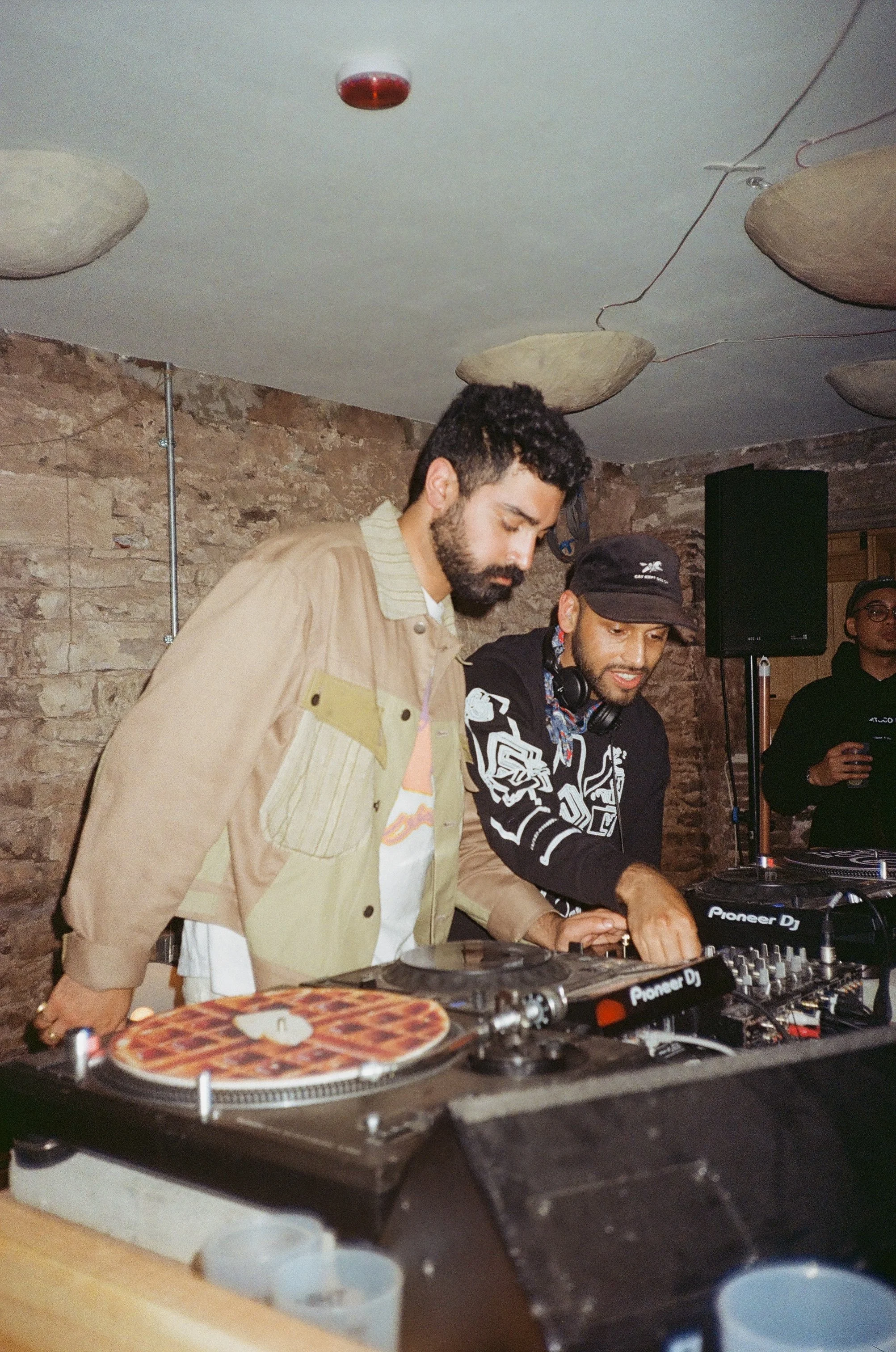
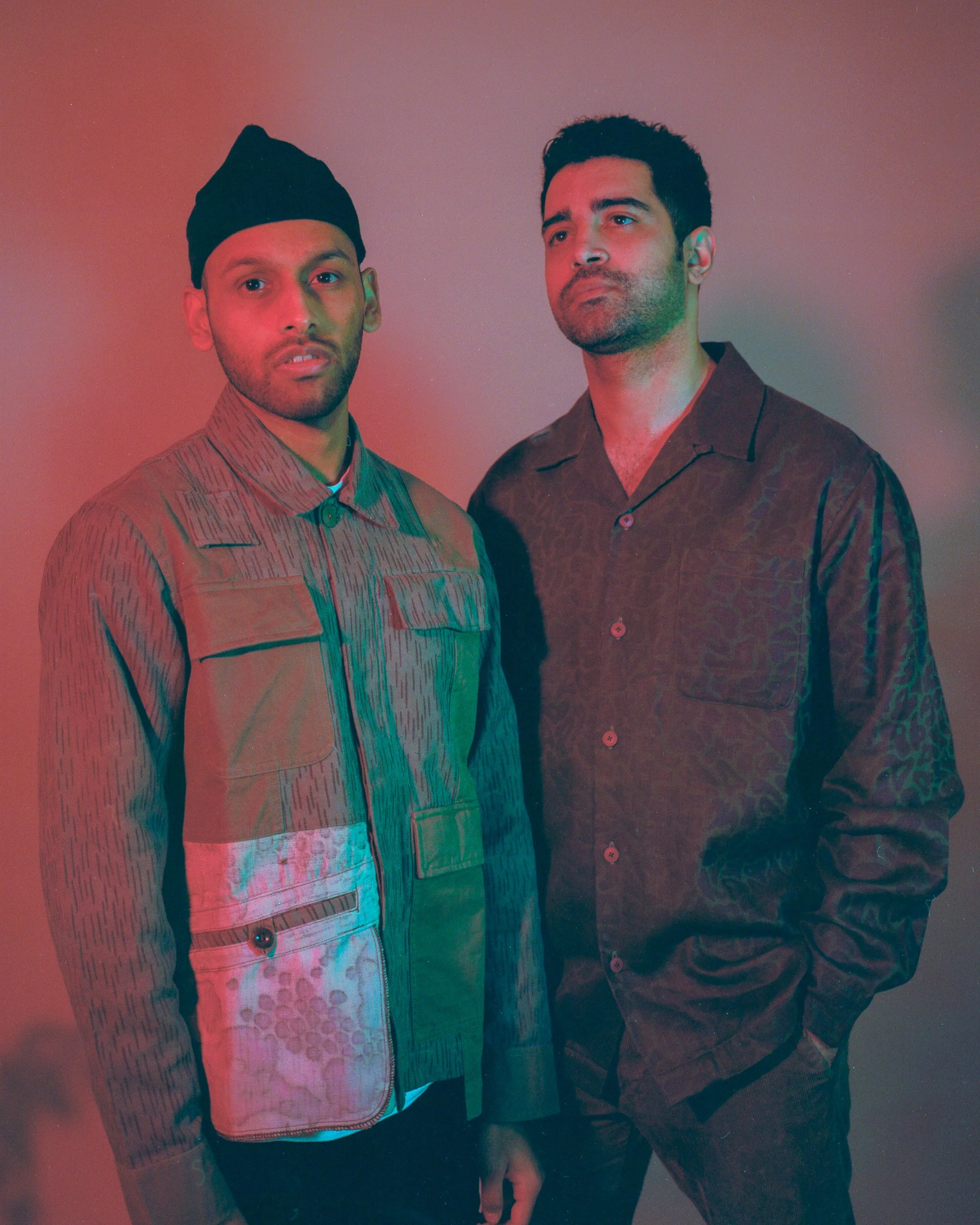
As two drummers with a strong grip on the intricacies of percussion, Mazen and Vish first bonded through their mutual love for the music that has stayed with them from a young age. Growing up in Bahrain, they remember being exposed to the old, grainy Egyptian films by Abdel Halim that they would roll their eyes at, instead turning their attention to what was playing elsewhere. “I think identity is such a weird thing when you’re young — [you find yourself] turning off the radio, finding what was popping in the West.” Going further, Vish admits that it “comes from a place of rebellion—a little bit of ‘who am I’, you know, as a young teenager when you’re trying to figure out what makes you tick.” Undoubtedly, the two of them were hungry to absorb a lot of the cultural traffic making its way into Bahrain, whether that was through reading three-month-old NME releases with their friends on the bus to school, or checking out something like Crystal Castles or Klaxons that a number of their peers would recommend whenever they returned from their families who lived abroad.
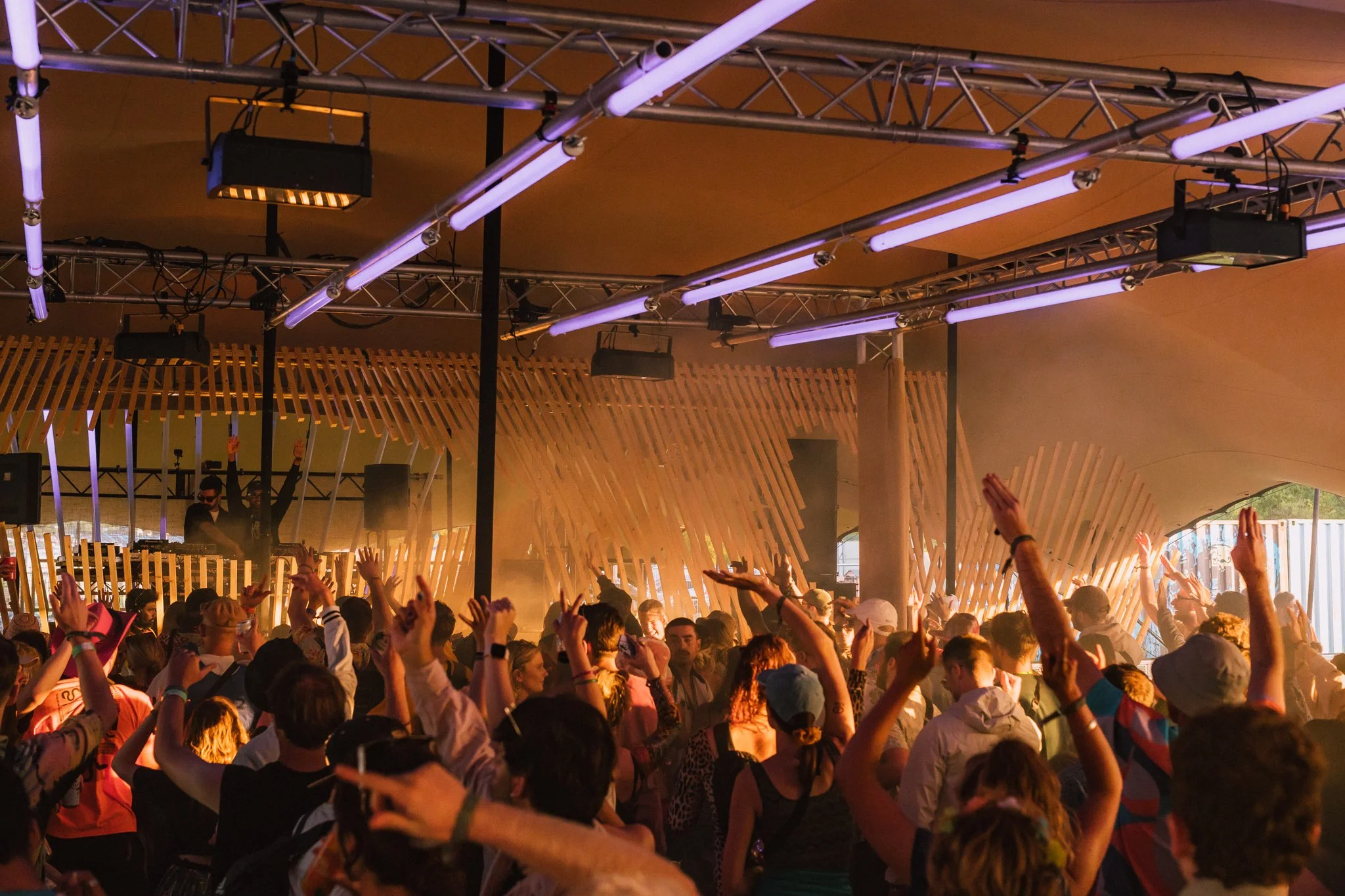
It was only when they first moved to the UK, that they found themselves gravitating back to the music they took for granted growing up, “the seed for it was missing home, being homesick,” Mazen admits. Yet, it was precisely at that nexus between longing for home and being so far from it, that the sonic coordinates of Dar Disku were determined. “I don’t have any guilt when I choose to listen to Aphex Twin instead of Asha Bhosle” says Vish unapologetically, “but at the same time, if I didn’t do that first, I wouldn’t have come back to Asha Bhosle.” With equal measure, Mazen acknowledges it was through that very same homesickness the Dar Disku project was able to blossom into something more. “It went from homesickness, to intrigue, into curiosity, to profound respect.” Later on, as the night approached its close, that level of reverence translated through a number of bittersweet Raï melodies playing on the dancefloor, with Cheb Nasro’s Kin Nchoufek (being Dardja Arabic for ‘when I see you’) resonating as a longing for loved one back home. Then, the bolder voices of Khaled, Faudel and Rachid Taha stepped in, which championed the global reach of their roots being so far from home can help instil.
In the studio, that newfound respect shines through their engagement with Arabic, melodic scales like the maqam, that they use to compose electronic music that Mazen describes as more ‘uplifting and light’ than compared to what others have produced in the Middle Eastern electronic music scene. When we considered artists like Deena Abdelwahed for example, who reproduces those scales in a way that leans into a darker sound, or Toumba, whose dubstep-orientated, percussive patterning can recall a political intensity that life in the Middle East can provoke, Mazen recognises that there exists a lot of music of resistance within the scene. “And we have nothing but respect for that and admiration—but that’s also not our reality.” With that said, they know that it is through the positivity of their sound that can usher in a different form of resistance. “There is a narrative globally – when you ask someone, on the street, what they think of the Middle East”, Mazen suggests “they gravitate to certain connotations”. Yet, in spite of those who might hold a warped view of the region as entirely war-torn or reactionary, Mazen shares that they were aware of this from very early on and “wanted to have challenged that and reinject the reality of the fact there is so much joy, community and togetherness.”

So, rather than shy away from their peaceful childhood in Bahrain, which allowed them to appreciate and eventually reconnect with the music that brought them to where they are today, Dar Disku chose to embrace this. “The best parties that we’ve ever thrown” Vish remembers fondly, “are when me and Mazen played at our friend’s house parties for new year’s eve in Bahrain, where all of our friends from school would come.” The positivity they choose to lean into, has in turn helped generate a lot of respect and solidarity within the electronic music scene they are a part of, regardless of how different artists approach those same melodies and sounds they engage with. “All we can do is be our authentic selves” Mazen says, “when we think about home and infusing that into our music it’s being by the beach. It’s a different reality.” That coastal vibe would soon emerge during the event, where the strum, dip and glide of surfer rock (a sound itself rooted in the maqam scale) would lap up on the crowd lost in the flow of the night, while the constellation of lights above would cast an oceanic blue. In a world that may seem too ready to slip into bleakness, Dar Disku continues to transmit a sonic vision of the Middle East that is enshrined with a deep sense of joy and humanity.
Written by Reda Gray
Edited by Zak Hardy