
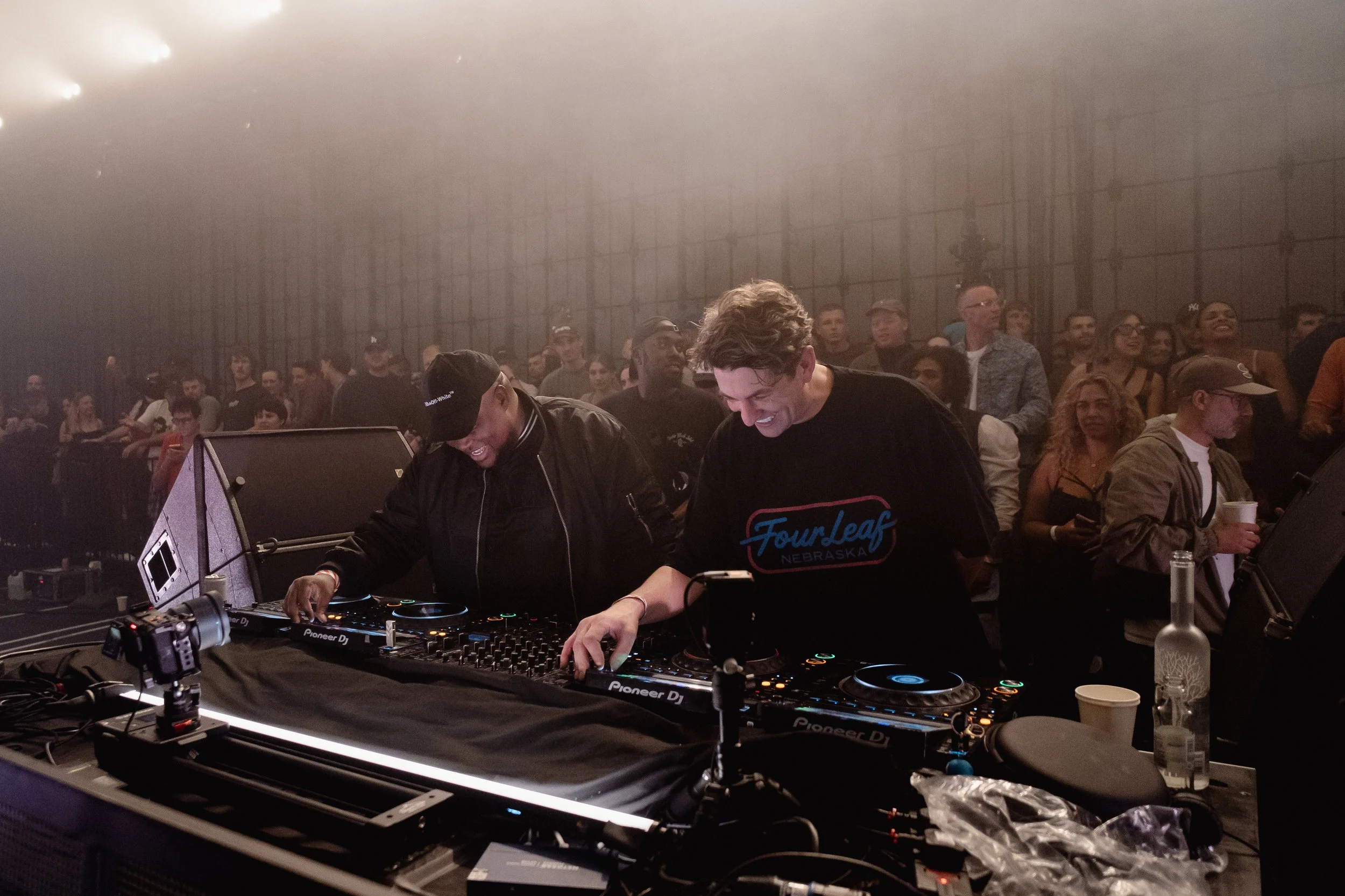
In light of their latest showstopping EP, “Gameshow”, writer Reda Gray speaks with Skream, Benga, and London-based curator Bad Behli about the roots of dubstep and the global journey the genre has undertaken.
Incubated in London's southern suburbs, garage heads searched for darker and bass-driven sounds not found in a megaclub. Today, Croydon-born DJs and Producers Oliver Jones and Adegbenga “Beni” Adejumo, also known as Skream and Benga, bathe in the acclaim for having nurtured a sound that became known as dubstep.
In a panel about the evolution of the genre, hosted by bass music curator Bad Behli, real name Shaneli Patel, Skream and Benga listened to an immersive soundsystem while reflecting on the trajectory-shaping tunes that helped define their careers.
From the B-side adjacent, lurking grooves of “1999” that key players such as El-B engineered, to the Benny III edit of the “elephant man” tune known as “log on”, who helped cultivate Skream and Benga’s sonic palette in the notorious Croydon record store Big Apple, “whenever anyone ever talks about the roots of Dubstep” Skream shared, “it all came through that shop”.
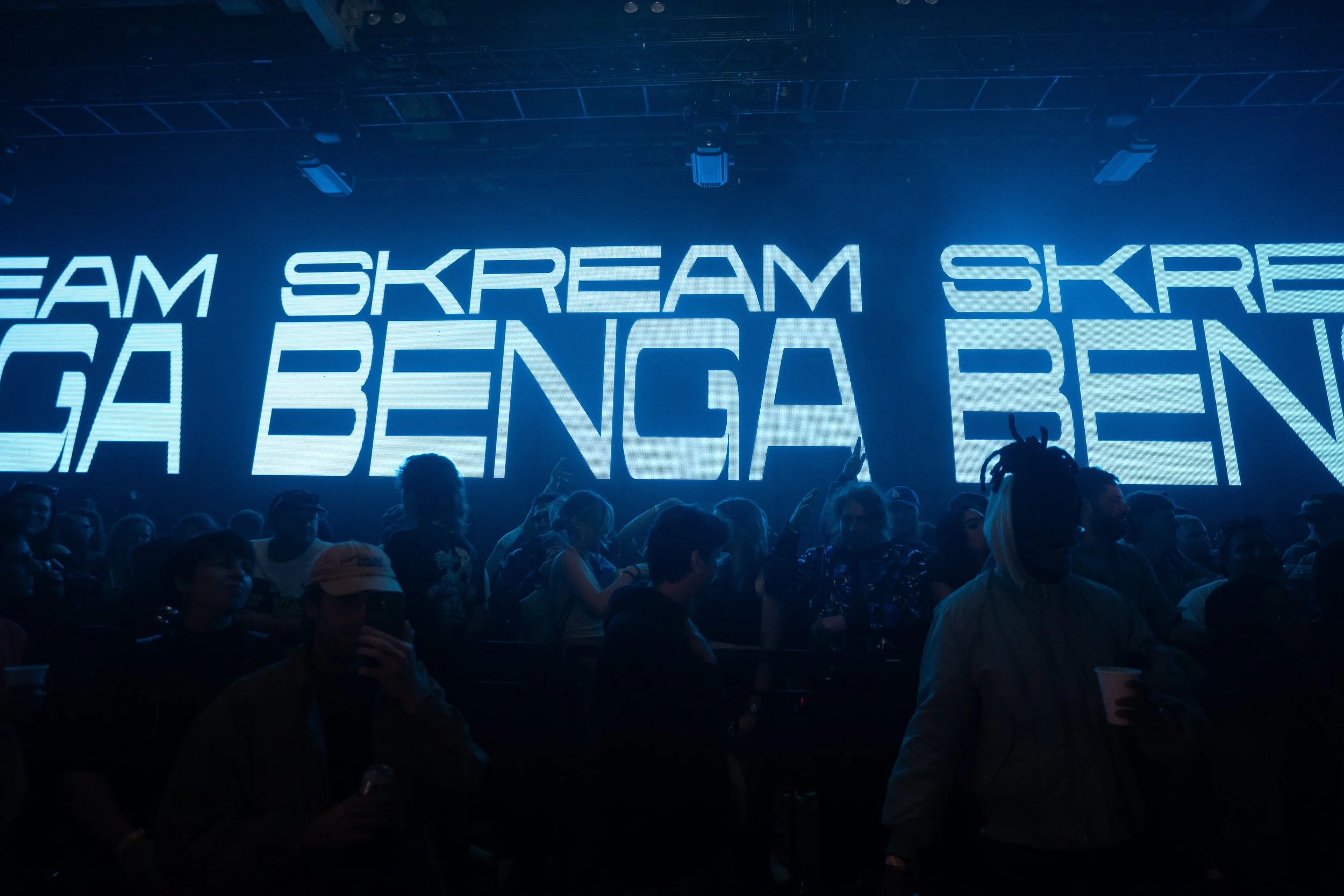
I sat down with all three of them ahead of their headlining performance at the DIA/LOG show, which celebrated the 25 years since dubstep’s inception. Together, we talk about how Plastic People skyrocketed the genre’s popularity, Skream’s disdain for the naysayers of old-school dubstep, and maybe how EDM isn’t so bad, after all.
(Note: This interview has been edited and condensed for length and clarity.)
Reda: What brings you guys together to reflect on the history of dubstep and where it’s going?
Benga: There’s so many new faces, people don’t quite know the story, or how we got here. But that’s not the pure reason why we do this. We do this because we’re having a lovely time.
Skream: In the same way, I feel like we’re in a ‘True Crime’ era. Like, people are obsessed with connecting the dots right now. That’s across the board. Up until we did our [reunion set] in Fabric [following 10 years on from when they were joint producers with Artwork (Arthur Smith) under the moniker Magnetic Man], it had been echoed in history. Everyone who was there that night says how it was just mental … of all ages.
Benga: At that night, and many other nights, people will say ‘my older brother used to listen to you’ and ‘I’ve wanted to come and listen to you two for the longest time’. So, here we are now.
Reda: Do you feel like dubstep has been taken more seriously over time—especially now that people are more invested in chronicling the genre?
Skream: I don’t think it’s ever been taken seriously!
Reda: Not even to this day?
Skream: It’s always been a bastardized lil’ brother of other things. When they put ‘Skream and Benga’ as the face of dubstep, personally, it took the excitement out of it for me because it was like everything’s riding on you on a wider level when there’s so much amazingly interesting stuff going on under you.
Reda: I guess with other dubstep producers like Coki and Mala they’ve spoken about the influences they’ve taken from jungle and soundsystem culture, while others have described their sound as bringing out the dub in two-step, for example.
When you both got started, was there a specific strand of music you felt like you were responding to before it very much evolved into its own thing?
Skream: Our hub was a record store. We had techno and house. Big Apple was the number one record seller in the country. You had Artwork who made the biggest underground garage record: Daniel Bedingfield's ‘Gotta Get Thru This’ was part of the blueprint of dubstep.
We were kids around adults massively interested in music. So, you’re just soaking it all in. It was the best years of our lives.
Benga: It’s so hard to say what in particular was the influence.
Skream: It was garage, it was just the natural progression. We was into garage, into girly garage. That was what everyone was into from South London.
Benga: Like ‘Flowers’ [by Sweet Female Attitude].
Skream: You was into what you was into when it came to buying records. But if you wanted to go out. Sneak into a club. Get your shoes on. Get your jeans on. Get your shirt on. You had to listen to whatever was played there. The majority of the time that was Jaheim’s ‘Just In Case’ or Denzie’s ‘Monster Boy’, you had to be into it all.
It was only when the police started to crackdown on garage raves and black music raves that everything started to go underground again. Hence how [legendary club night that helped launch dubstep] FWD started.
And all the b-side stuff gained popular traction. MCs, we can’t take away from the MC culture, Delight FM.
Benga: Grime.
Skream: And the Pirate Radio station sort of stuff. Cos when I was thinking earlier about old tunes, although we go back to Wookie and El-B. We got to remember DJ Big Kidd and Dan Da Man [of So Solid Crew) and all them lot.
Benga: Even Dizzee Rascal.
Skream: Yeah, but them Pirate Radio Sunday sessions I used to record on tape — that was So Solid really. ‘So Solid Sundays’.
Reda: Beni, you mention seeing a lot of new faces. Seeing the scene become more global, do you guys feel that something has been lost along the way, or that the music has picked up on a lot of new influences and trends?
Bad Behli: I think the global influence in today’s music [has provoked] changes. Especially compared to the records these guys were making twenty years ago. Just the way songs are produced now are completely different. The way society is is completely different.
Skream : 100%.
Bad Behli: How you produce your record. How you package it. How you try and market it. How you consume it on the dancefloor. It’s completely different to what it was back then making 12” dubplates. It was more about locking in rather than now where it comes to just grabbing your attention. It’s very different.
But the beauty of it is that everyone feels very connected now. I hear songs all the time that have different influences from sounds all around the world. And they’re all sort of merging together into one.
[For example] there are a lot of bass tracks with Amapiano influences, which is amazing to hear. You’re not hearing that ten years ago. So, that’s just the interesting thing from my perspective as someone who has been in love with music for so long, is seeing the global influence of sound.
Skream: The mad thing no one mentions was EDM started off the back of us lot taking dubstep to America and it getting more popular with Skrillex. There’s so many other names, but that’s the bit where everyone goes ‘everything changed’.
But we encouraged it. We wanted that. D’ya know what I mean?
Benga: But do you think something’s been lost — compared to when we first started to now?
Skream: Nah, you’d be buzzing to be making tunes now. The only problem is it’s so much harder to cut through the noise.
The way things have taken on now, radio edits are at an all time low, length-wise. In the same way an extended mix is 340 (3 minutes and 40 seconds).
Reda: Compared to back in the day, do you guys feel you’ve changed the way you play a set or produce music [to pivot] it to bigger crowds now?
Benga: It changes for me every year, massively. Because in terms of the way my tunes are moving now, I used to probably build two or three sections. Now I’m building five or six. And I think it feels better to me. So I’m not gonna come and be like ‘it’s all changed and it’s horrible’.
I’m definitely more interested in some of the songs I make and I’m actually more proud of my more recent things and inputs with Ollie.
Skream: The other thing is, Skream and Benga are two completely different entities. But Skream & Benga together is big-stage music. So if you book Skream & Benga in a 50-cap gaff, it’s going upside down.
Hence how EDM started. We turn up, no matter how big the crowd is. We’re going in to go off. [In the past] it wasn’t like there was time to be clever. We were making tunes to make people go do backflips.
The [US] kids who became producers were watching us. This is what I always hated back in the day when people expected us to criticize America.
No. We had it off.
Bad Behli: I think the work you did back then to grow the scene in America is the reason why dubstep has come back round again and has very healthily had a 2.0. You built the foundations.
Skream: It’s cos EDM was going against everything we did back then. It’s shit we didn’t play. You couldn’t play a big stage.
This is why I always bring up Skrillex, if it wasn’t for ‘Rumble’ [the Grammy award-winning tune by Fred Again, Skrillex and Flowdan] people wouldn’t be making this deep, dark and dangerous dubstep. All them tunes getting made now is what Youngsta used to play.
Reda: Do you guys feel like any part of you has still retained a bit of competition within yourself, where you might want to outshine each other or other producers?
Benga: Honestly, I feel like that’s changed a lil’ bit. Before, it was just about who’s gonna make the bigger tune. But now, between us, I just want to hear us putting out that better music.
Skream: The whole point is us being together. It’s just so enjoyable.
Reda: Shaneil, I hear you got handpicked for Drumsheds?
Bad Behli: I’m just quite grateful to be on the lineup, to be honest.
Skream: So am I!
Bad Behli: Dream come true! I was saying to Beni earlier that I first started getting into electronic music when I was 18 during uni in Birmingham, 2008-2010. I was literally getting into dubstep at the height of it. I was obsessed. The first music I used to DJ was dubstep. That’s all I used to do – burn MP3s, burn CDs, play dubstep.
Skream: I miss a CD.
Bad Behli: I really do as well. I miss CDs. I might bring my CD case next Saturday. Just whip some of them out!
I started this series [365 Tunes in 365 Days] to just promote the music that I love. I only wanted to play 10 DJ sets this year. That was my goal cos I had a few years out working my full-time job. Life has changed. The world has changed. Day 270 of the year. Now sitting in a room with Skream and Benga doing an interview. This is mad!
Reda: What can we expect at Drumsheds?
Skream: We’ll be doing the same thing we’ve been doing in the last two years of shows, which has been turning up and f—ing having it off. I’m not gonna play ‘Midnight Request Line’ just cos I’m in London. We’re on an extremely cutting edge lineup. I’m never a nostalgic one. I just come in and take heads OFF.