
Grime’s Love Affair with Nike

Grime crew The Square, sitting on top of garages wearing Air Max, 2015.
Every subculture has its uniform. Punks had Doc Marten boots, Skaters had Vans trainers, and 90s ravers had Adidas jackets. It’s common for subcultures to have one or a few identifiable clothing items. For people in the grime scene, Nike ruled above all.
Formerly known as Eskibeat or Eskimo, grime erupted onto the scene in the early 2000s as garage music splintered into two paths, dubstep (also known as 140) and grime. The former evolved from the darker, heavier side of garage with dubby sounds and 2-step rhythms. Grime developed from the MC-heavy, faster, and more aggressive sounds of the scene, influenced also by jungle music. In 2002, Wiley released ‘Eskimo’ and an explosion of hard-hitting MCing turned into grime. The genre quickly became the freshest new sound out of the UK, and most importantly, became the anthem of the disenfranchised London youth, wearing Nike as their uniform.
“I was hot stepping in my Nike Air sneaker… You didn’t know I was an MC beater, defeater.”- Wiley

Novelist wearing Air Max
Youth culture, at its best, is the rejection of everything that came before it. Lovers of grime rejected UK garage's obsession with luxury high-end brands, at a time where Versace and Moschino were religiously worn. For young grime enthusiasts, these brands didn’t represent the urban youth of London anymore, and Nike sportswear became king. One of the first recognisable images of sportswear appearing in popular culture is Dizzee Rascal's ‘Boy in Da Corner’ album cover, with his Air Max BW shoes clearly centred. Grime creator Wiley also poses with the musician while wearing Air Max 90 in a photoshoot, 2002, a year after Dizzee’s seminal album.
The success of Nike boils down to two basics: comfort and style. When Grime came up the sportswear company held significant cultural weight in London street culture. What started as the logo of a sportswear brand had simply become a status symbol. Grime artist Novelist, who founded the group The Square, recalled that he got his first pair of Air Max 95s at age 11, calling it a ‘big boy crep’. The point of a child wearing these shoes is vital, a child needs nothing more than a comfortable shoe, but an eleven year old wearing Nike trainers is about more than that. It tells the story of how Nike became an ideal of respect and understanding in street culture. It became understood that every crew had its own clothes, music, and postcode, but if you weren’t wearing Air Max you were a nobody. It wasn’t about looking ultra ‘flash’, or expensive - on the contrary, Sportswear brands and more specifically Nike, were about reflecting the UK’s urban working-class youth. Big H’s single ‘Nike Air Max’ is perhaps the most emphatic symbol of this, featuring the repeat lyrics ‘Nike Air Max, everywhere I go, Nike Air Max’, and “Nike Air anthem.. It's the soundtrack to your crep selection". The MC of course sported Air Max 90s in the accompanying music video.
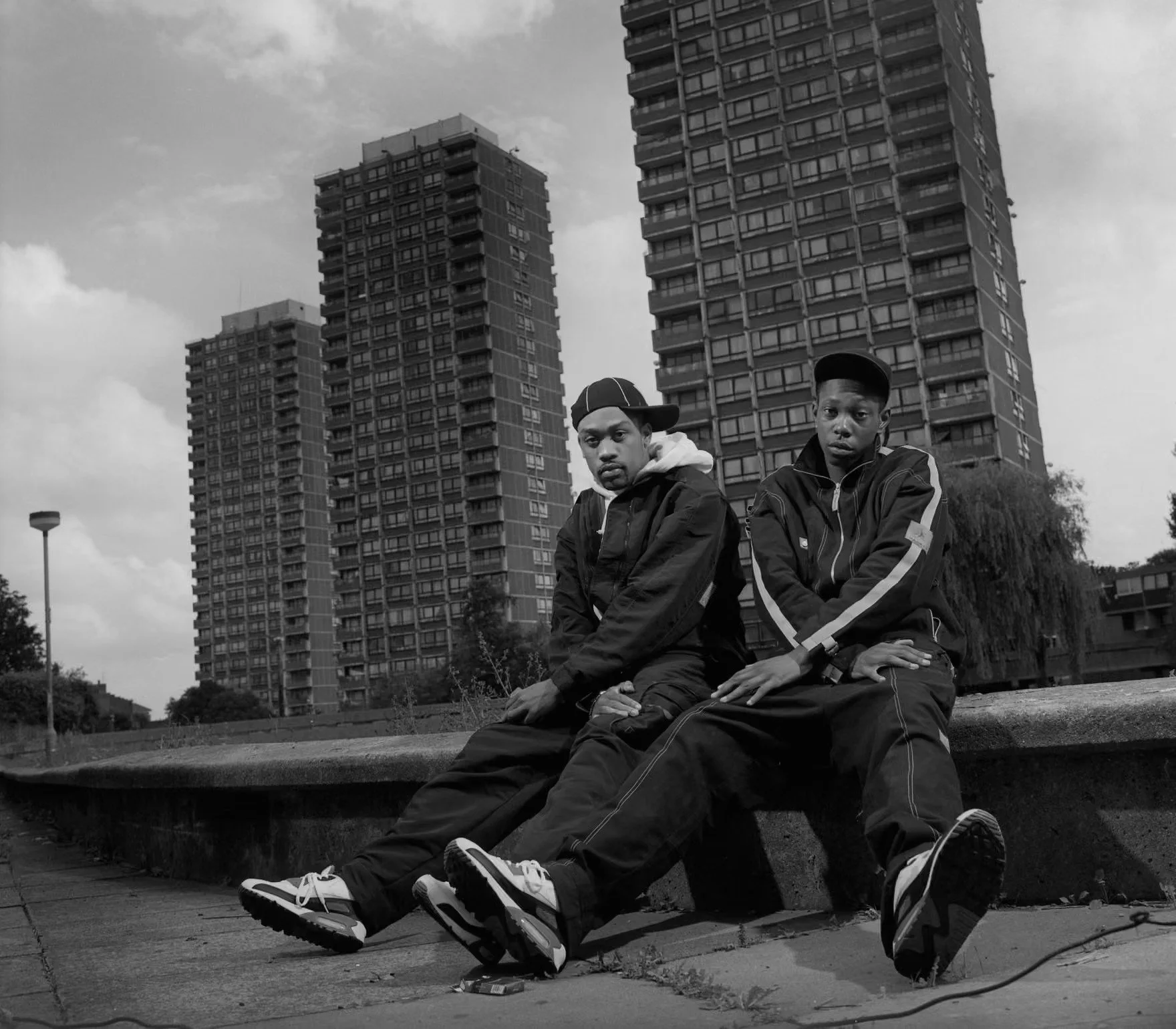
Wiley and Dizzee Rascal wearing Air Max 90
“And if you're talking a AirMax, trust me it's gotta be a '95”- Footsie
With a price of £110 for the 95s Airmax shoes were often referred to as ‘110s' on the streets of London. If you weren’t wearing Air Max, everyone knew you couldn’t afford the £110 entry point, and by the early 2000s, tracksuits and trainers were deeply embedded in urban youth culture. The days of showing up to a club in trainers and being laughed out the door were starting to come to an end.
Air Max played a pivotal role in youth culture as the shoe of choice, but it doesn’t stop there. Speaking about his love of Nike Shox, Skepta proclaimed “the Nike Shoe [Shox] reminds me of my childhood and growing up in London. I used to see people wearing them on the bus, and I always wanted a pair. They’re a classic shoe that will always be cool”. He famously wore Nike Shox TL in the music video for his 2019 single ‘Bullet From A Gun’.
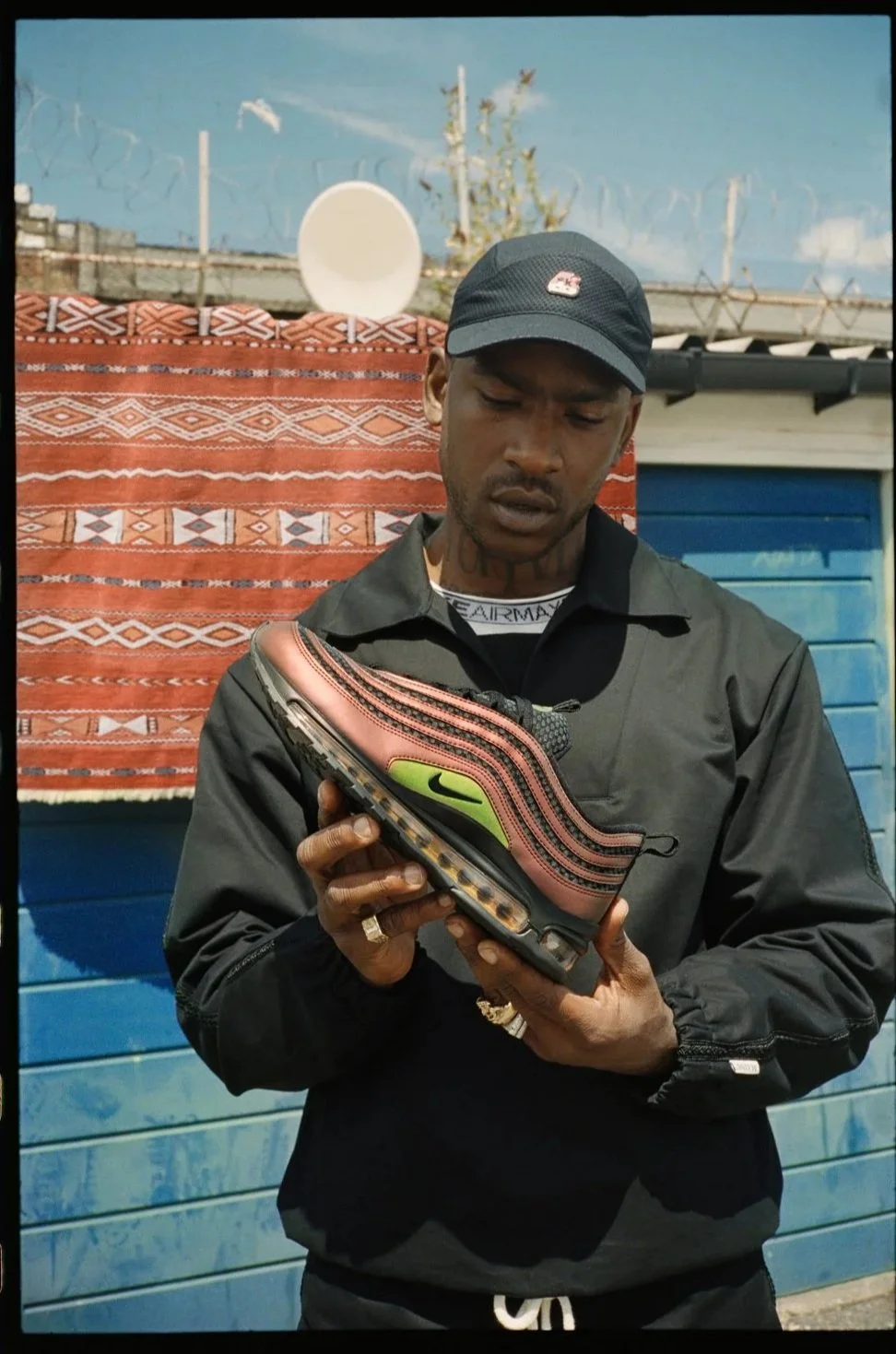
Skepta holding Air Max 97 SK Morocco

Skepta posing with his Air Max, mid 2000s.
In the early 2000s grime was seen as violent and aggressive, which led to the music being pushed underground and consumed via illegal pirate radios, such as Rinse FM and Deju Vu. In the time of dial-up internet and MySpace was just a geeky fad. Google wasn’t used for style inspiration, and there were certainly no TikTok Get Ready With Me videos. Fashion addicts embraced what they knew, and if you had the right trainers on, you were someone. In the 2000s the Shox TL were this shoe, so much so that Skepta collaborated with Nike on a Shox drop in 2019. “When I used to go to Manchester, all the kids were rocking Shox… It was a real street shoe there. I liked their swag.” In 2021, the pair collaborated again to celebrate the impact of the brand on Skepta’s youth; they released the Air Max Tailwind 5, which included joggers, a windbreaker, and a bucket hat to go with it. With Skepta collaborating with the sportswear brand a total of six times, future collaborations don’t appear to be off the cards.
Skepta wasn’t the first grime musician to collaborate with Nike. In 2008, Nike Town store invited Wiley, JME, Skepta, Jammerz, Tempz, and more, to design their own shoes, the names of which can still be found online. JME named his shoe the ‘Nike Merkel’, on which he designed a unique black colourway. Seven years later, the relevance of the brand continued to be felt as Lord Of The Mics held their seventh streamed grime battle right outside the Oxford Circus flagship store. In modern day, the Nike legacy continues within Grime through artists like Flohio who continue to rep the legacy of the Air Max 90. Speaking to Nike directly in an article posted on their website, “The Air Max represents mad youth. And everyone had a pair of Air Max, and if you didn't, then you're the odd one out”
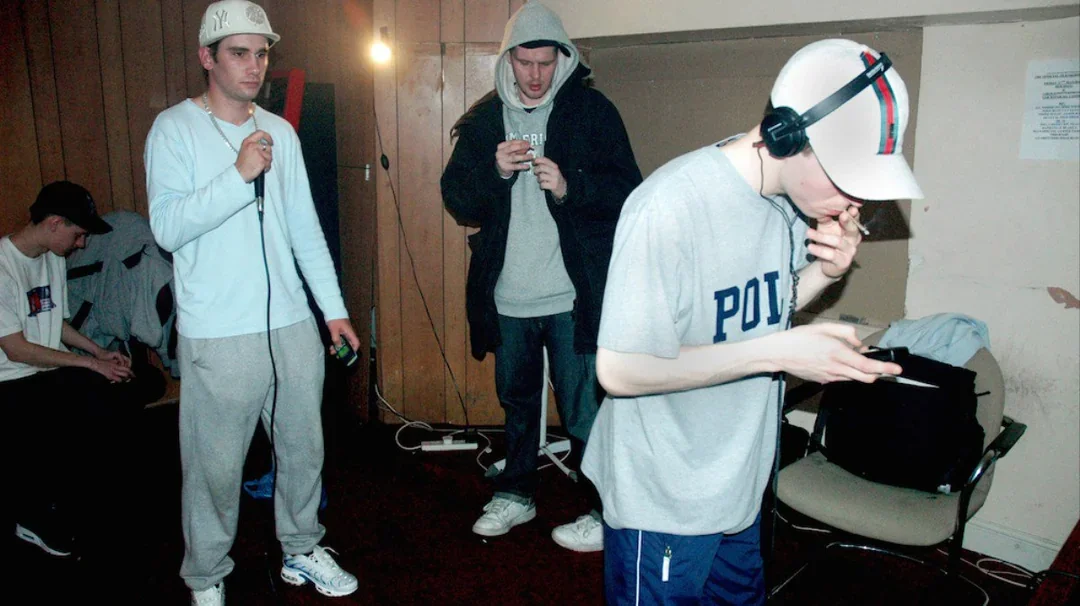
Rinse FM studio with Youngsta, Task & Loefah, 2005 (more Dubstep than Grime, but overlap)
From the outside looking back, it may look as if Grime was sponsored by Nike. In reality, the partnership was due to rapid change in the 2000s with the growth of urban street culture. Shifting economic priorities in the mid 2000s caused a spike in inequality, and yet working and middle-class kids fell in love with streetwear alike, though no one wore it prouder than the grime artists who knew the streets best.
*Note, Dizzee Rascal was convicted of assaulting his wife in 2022. While we can’t change the past and Dizzee’s influence on Grime, we can decide to limit his role in this article. We instead chose to focus on Skepta’s collaborations with Nike.*
Written by Zak Hardy
Edited by Sophie Yau Billington